


What Does the P0480 Code Mean?
P0480 means the engine computer detected a fault in the cooling fan control circuit.
Specifically, the code refers to the Fan 1 Control Circuit, which controls the primary radiator cooling fan.
When the PCM (Powertrain Control Module) sends a command to turn on the fan but does not detect the expected electrical response, it triggers the P0480 diagnostic trouble code (DTC).
In European vehicles, this may appear as EOBD DTC P0480, but the meaning is the same.
In simple terms: the car tried to activate the cooling fan, but the control circuit did not respond correctly.
What Is “Fan 1 Control Circuit”?
The Fan 1 Control Circuit is the electrical system that controls the primary cooling fan.
This circuit connects several components that allow the engine computer to control the radiator fan.
Typical components in the circuit include:
- PCM (engine computer)
- Cooling fan relay or control module
- Radiator cooling fan motor
- Fuses
- Wiring and connectors
When the engine temperature rises, the PCM sends a signal through this fan 1 control circuit to activate the cooling fan.
If the signal is interrupted or the circuit behaves abnormally, the vehicle stores the P0480 code.
How the Cooling Fan Control System Works?
The cooling fan system keeps the engine from overheating by pulling air through the radiator.
The system works through a simple control process.
-
The coolant temperature sensor monitors engine temperature.
It sends real-time data to the PCM. -
The PCM decides when the fan should turn on.
This usually happens when the engine temperature rises or when the air conditioning is running. -
The PCM sends a signal through the fan control circuit.
This activates the fan relay or fan control module. -
The relay powers the cooling fan motor.
The fan starts spinning and pulls air through the radiator.
If the PCM sends the command but the fan does not respond, the system detects a circuit fault and stores DTC P0480.
Where Is the Fan 1 Control Circuit Located?

Figure 1: Typical location of cooling fan power components in the engine bay PDC
Primary Hub (Core Components)
- The cooling fan relay and fuse— the circuit’s core parts—are located inside the Power Distribution Center (PDC) or engine bay fuse box.
- Check the diagram on the underside of the fuse box lid for labels like "RAD FAN," "COOL FAN," or "FAN 1" to identify them quickly.
Secondary Key Locations
- Directly behind the radiator: Cooling fan assembly (includes the cooling fan motor and fan shroud; some vehicles have an integrated fan control module here)
- Near the Engine Control Module (ECM/PCM): Related PCM electrical connections and the wiring harness that runs from the power distribution system to the entire fan assembly
5 Symptoms of the P0480 Code
1. Illuminated Check Engine Light
2. Abnormal Cooling Fan Operation
- The primary cooling fan fails to turn on even when the engine reaches operating/high temperatures;
- In some cases, the cooling fan runs constantly (a less frequent but common circuit fault symptom).
3. Engine Temperature Rise at Idle
4. Engine Overheating in Traffic
5. Weak Air Conditioning Performance / Warm A/C Air
What Causes the P0480 Code?
The P0480 code is usually caused by electrical component failure within the fan command circuit. In many cases, the problem is not the fan itself but the electrical control system.
- Blown Fuse: A high-amperage fuse protecting the fan motor has burned out.
- Faulty Relay: The cooling fan relay is stuck or has burned contacts, preventing power flow.
- Damaged Wiring or Connectors: Corroded, frayed, or melted wires or faulty connectors/pins between the fuse box and the fan motor disrupt the signal.
- Failed Fan Motor: The internal motor of the cooling fan has seized or reached the end of its lifespan.
-
Poor Ground Connections: Corrosion, damage, or looseness at critical grounding points (G101, G102, etc.) for the fan motor, relay, or PCM control circuit. -
Faulty PCM (Powertrain Control Module): An internal failure within the engine computer preventing it from sending the signal to activate the fan relay (less common, but possible after other components are ruled out).
Common Misdiagnosis of the P0480 Code
One of the most common mistakes when diagnosing a P0480 code is assuming that the radiator fan itself has failed. In many real-world cases, the actual problem lies elsewhere in the cooling fan control circuit.
The following cases come from our team's research into real user discussions on automotive forums such as Reddit and FocusST.org. By analyzing these repair experiences, we found several recurring misdiagnosis patterns.
Typical Misdiagnosis Patterns
When the P0480 code appears, drivers and even some technicians may initially suspect the wrong component. The most frequent misdiagnosis points include:
-
Assuming the radiator fan motor is faulty
In many cases, the fan motor still works normally when powered directly. -
Blaming the A/C system instead of the fan circuit
Some drivers notice the problem only when the air conditioning is on, which leads them to suspect an A/C issue. -
Overlooking the fan control module
Many modern vehicles integrate the fan control module into the fan assembly, making it easy to miss during diagnosis. -
Skipping relay and fuse inspection
A blown fuse or failing relay can prevent the fan from activating even when the fan motor is still functional. -
Ignoring wiring or connector problems
Corrosion, loose connectors, or damaged wiring can interrupt the control signal from the PCM.
Real-World Example: Volkswagen Golf Mk5
One Volkswagen Golf Mk5 owner reported that the check engine light only appeared when the air conditioning was running.
During testing, the main cooling fan operated normally, but the smaller auxiliary fan never activated. Because the issue only appeared with the A/C on, the owner initially suspected an A/C-related problem rather than a cooling fan circuit fault.
After further investigation, experienced users suggested that the fan control module integrated with the main fan assembly was more likely responsible. Replacing the entire fan assembly ultimately resolved the P0480 code.
Real-World Example: 2013 Ford Focus
A similar situation occurred in a discussion involving a 2013 Ford Focus owner.
The driver noticed:
- Coolant temperature rising at idle
- The issue becoming worse when the A/C was running
- Normal cooling performance at highway speeds
At first, the owner suspected the radiator fan itself had failed.
However, after checking the fan relay, fuse box, and wiring, the real issue was identified as a faulty fan control module, which prevented the fan from activating when commanded by the PCM.
Key Diagnostic Insight
These real-world cases highlight an important lesson:
- A P0480 code rarely means the fan motor itself is broken.
- More often, the fault lies in the relay, fuse, wiring, or fan control module that manages the cooling fan circuit.
- Skipping these checks can easily lead to unnecessary parts replacement and higher repair costs.
Can You Drive With a P0480 Code?
Not recommended except in emergencies.
| Scenario | Risk Level | Action |
|---|---|---|
| Engine is overheating | ⚠️ STOP IMMEDIATELY | Pull over, shut off engine. Towing required to avoid engine damage. |
| Cool weather (<70°F/21°C) | 🟡 Low (short trips only) | Drive <5 miles at low speed (<35 mph) with heater on MAX. Monitor temp gauge constantly. |
| Stop-and-go traffic | 🔥 EXTREME | Avoid completely. Idling lacks airflow → rapid overheating. |
| Highway driving (cool temps) | 🟠 Moderate | Only if temps stay normal. Exit if gauge rises above midpoint. |
| A/C is needed | 🔥 EXTREME | P0480 often disables A/C. Driving in heat → cabin overheating risk. |
How to Diagnose the P0480 Code
Basic DIY Diagnostic Steps (No Special Tools | Most Owners Can Do)
-
Confirm the P0480 Code with an OBD2 Scanner
Plug in a basic OBD2 scanner (affordable for home use) to the vehicle’s OBD port, confirm the P0480 code is stored, and check for related cooling/electrical codes (eliminates other overlapping faults).
For DIY diagnostics, a basic code reader can quickly confirm whether P0480 or related cooling system codes are present.
For example, tools like the ANCEL AD410 OBD2 Scanner allow car owners to read and clear engine codes in seconds, making it much easier to confirm whether the cooling fan circuit is actually triggering the fault.
-
Quick Test Cooling Fan Operation (A/C Trick)
Turn on the vehicle’s air conditioning to max: the cooling fan should start immediately on most cars. If it doesn’t, the fan circuit has a clear fault; if it does, the issue may only trigger under engine heat (narrowing the fault range).
-
Inspect the Cooling Fan Fuse
Locate the cooling fan fuse (labeled RAD FAN/COOL FAN/FAN 1) in the engine bay fuse box/PDC, check if the fuse wire is broken. Replace the fuse with the same amperage if blown (a quick fix for the most common fault).
-
Test the Cooling Fan Relay (Swap Method)
Pull out the cooling fan relay (next to the fan fuse), swap it with an identical, known-working relay from a non-critical circuit (e.g., horn, fog light—check relay pin layout matches!). If the fan works after swapping, the original relay is faulty (2nd most common fault).
-
Visual Inspect Wiring & Connectors
Check the wiring harness and plastic connectors between the fuse box, relay, and cooling fan (behind the radiator) for obvious damage: corrosion, frayed wires, loose plugs, or melted plastic. Unplug and re-plug connectors to fix loose contacts (no tools needed).
-
Directly Test the Cooling Fan Motor
This quick check rules out a faulty fan motor (rare for P0480): Ensure the vehicle is off/unplugged, then manually spin the fan blade—if it’s seized/stuck (won’t spin freely), the motor is faulty. If it spins smoothly, the motor is likely good.
Advanced Diagnostic Steps (For Owners with a Multimeter/OBD2 Scanner | More Precise)
-
Check Voltage at the Fan Motor Connector
Use a multimeter to test for 12V power at the fan motor’s electrical connector when the engine is hot/A/C is on. No voltage = fault in wiring/relay/fuse; 12V present but fan won’t run = faulty fan motor/control module.
-
OBD2 Scanner Active Fan Test
Use a scanner with active test function to send a "fan ON" command directly from the vehicle’s ECM/PCM. If the scanner shows the command is sent but the fan doesn’t start, the fault is in the wiring/fan motor (not the ECM/PCM); if the fan starts, the ECM/PCM or temperature sensor may be the issue (very rare for P0480).
Some advanced diagnostic scanners can perform this active test directly.
For example, professional-level tools like the ANCEL DS600BT allow users to send commands to vehicle components (such as the cooling fan) and observe whether the system responds correctly. This helps determine whether the fault is in the fan motor, wiring, or the control circuit.
Key DIY Tip for Owners
- Always start with the fuse and relay check—these are the 2 most common causes of P0480, take 5 minutes to inspect, and require no special skills/tools.
- Replace only the faulty part (no need to replace the entire fan assembly unless the motor is seized!).
How to Fix the P0480 Code (Comprehensive Guide)
Repairs progress from simplest/cheapest to most complex. Always diagnose before replacing parts!
-
Verify Symptom & Safety Prep:
- Confirm cooling fan doesn't activate when engine is hot (or runs constantly).
- Let engine cool completely before working near fans/radiator.
- Gather tools: Multimeter, test light, wiring diagrams (Fuse/Relay locations), basic hand tools.
-
Inspect & Replace Blown Fuse:
- Locate the cooling fan fuse (consult owner's manual/diagram).
- Visually inspect: Look for broken filament or discoloration.
- Test with multimeter: Check for continuity (0 ohms) or voltage across both sides (12V+ with key ON if applicable).
- If blown: Replace with fuse of exact same amperage rating.
- Critical: If new fuse blows immediately, a major short circuit exists (bad motor/wiring) - stop and diagnose deeper.
-
Test & Replace Faulty Relay:
- Locate cooling fan relay (often in underhood fuse/relay box).
- Swap Test: Replace with a known good identical relay (e.g., horn relay). If fan works, replace relay.
- Multimeter Test: Check for coil resistance (usually 50-120 ohms across control terminals) and switch continuity (should close when 12V applied to coil). Replace if faulty.
-
Inspect & Repair Wiring Harness & Connectors:
-
Visual Inspection: Follow wiring from fuse box → relay → fan motor (high-power circuit) and PCM → relay coil (low-power control circuit). Look for:
- Chafing/rubbing against sharp edges.
- Melted/burned insulation (near exhaust/hot components).
- Corrosion at connectors (especially near radiator).
- Bent, pushed-out, or corroded pins in connectors.
- Repair: Cut out damaged section. Splice in new wire of same gauge using solder and heat-shrink tubing or high-quality, waterproof crimp connectors. Clean corroded terminals/pins. Apply dielectric grease to prevent future corrosion. Secure harness away from heat/moving parts.
-
Visual Inspection: Follow wiring from fuse box → relay → fan motor (high-power circuit) and PCM → relay coil (low-power control circuit). Look for:
-
Clean & Secure Ground Connections:
- Locate ground points (G101, G102, etc. - consult diagram, often near radiator support or chassis).
- Disconnect battery negative terminal first.
- Remove ground strap/bolt. Clean mating surfaces (chassis/frame and wire terminal) to bare metal using wire brush/sandpaper.
- Reattach securely. Apply anti-corrosion spray if available.
-
Test & Replace Cooling Fan Motor:
- Direct Power Test (Confirm Failure): Disconnect fan motor harness. Apply direct 12V and ground from the battery to the motor terminals briefly (use heavy gauge jumper wires). If motor doesn't run (and wiring/grounds are good), the motor is faulty.
- Replacement: Remove shroud/fan assembly bolts. Disconnect harness. Install new OEM or high-quality aftermarket fan motor assembly. Ensure wiring connector is fully seated.
-
Test & Replace Fan Control Module (if equipped):
- Some vehicles use a separate module (not just a relay) to control fan speed/pulse.
- Diagnosis typically requires scan tool command or specific voltage/resistance tests per service manual.
- Replace module if confirmed faulty.
-
Test Control Signal & Replace PCM (Last Resort):
- PCM Signal Test: With relay removed and key ON (engine hot or command active via scan tool), use multimeter to check for 12V (or pulsed ground, depending on circuit design) at the PCM's control wire terminal at the relay socket.
- No Signal: If fuses, wiring, grounds, and inputs (like ECT sensor - should have its own code) are confirmed good, the PCM's internal driver circuit is likely faulty.
- Replacement/Repair: PCM replacement requires programming (VIN, immobilizer). Consider professional auto-electrician or dealership. PCM repair services are also available.
How Much Does It Cost to Fix the P0480 Code?
| Repair Item | DIY Cost | Shop Cost | Notes |
|---|---|---|---|
| Diagnostic Fee | $0 (Self-tested) | 150 | Shop fee for code scan + circuit testing. May be waived if repair done there. |
| Fuse Replacement | 15 | 50 | Cost of fuse + labor. If fuse blows again, indicates deeper issue. |
| Relay Replacement | 25 | 90 | Relay cost + labor. Simple 5-min fix if relay is root cause. |
| Ground Connection Repair | 20 | 120 | Cost of sandpaper/contact cleaner + labor to clean/secured grounds. |
| Wiring Harness Repair | 60 | 400 | Wire/connector kit cost + labor. Severe damage raises cost significantly. |
| Cooling Fan Motor | 300 | 800+ | Part cost varies by vehicle (OE vs. aftermarket). Labor: 1-2.5 hrs. |
| Fan Control Module | 350 | 900+ | Required in some vehicles (e.g., PWM-controlled fans). Programming may add cost. |
| PCM Replacement/Reprogram | 1,000+ | 2,000+ | Rare cause. Includes module + programming/immobilizer sync (dealer often required). |
How to Tell If a Cooling Fan Relay Is Bad?
A bad cooling fan relay is identified by testing whether the relay can properly send power to the fan when commanded.
Instead of relying on symptoms alone, the relay should be verified using a few quick checks.
- 1. Perform the Relay Swap Test(fastest )
The easiest way to confirm a bad relay is to swap it with an identical relay.
If the fan starts working → the original relay is faulty
If nothing changes → the problem is likely elsewhere
- 2. Listen for the Relay “Click”(not fully reliable)
A functioning relay usually produces a clicking sound when activated.
Turn on the air conditioning or allow the engine temperature to rise.
Then listen near the fuse box.
Click heard → relay is receiving the command
No click → relay may be defective or not receiving signal
- 3. Check Relay Power with a Multimeter
A multimeter can confirm whether the relay is sending power to the fan circuit.
Voltage present at output → relay is working
No output voltage → relay failure likely
- 4. Look for Signs of Relay Overheating
Physical damage can also indicate a failing relay.
Inspect the relay housing for:
-
- Burn marks
- Melted plastic
- Corroded pins
These signs suggest internal electrical failure.
Can a Faulty Cooling Fan Cause a P0480 Code?
Yes, a seized or shorted cooling fan motor frequently triggers the P0480 code.
- Internal Short: A damaged motor may draw excessive current (amperage), causing the fuse to blow and triggering the circuit fault.
- High Resistance: Increased resistance in a worn motor can cause the computer to register an "open circuit" error, leading to the P0480 designation.
However, the fan motor is not the most common cause. More often, the problem lies in:the fan relay, the fan control module or wiring faults.
P0480 Code by Vehicle Brand
| Brand | Key P0480 Fault Characteristics (Brand-Specific) |
|---|---|
| General | P0480 definition is standardized across all brands
|
| Chevy/GM | Fan control relies on integrated fan control module (FCM)
|
| Jeep/Dodge | High susceptibility to wiring harness corrosion
|
| Ford | Cooling fan electrical connector prone to melting
|
How to Prevent the P0480 Code?
| Prevention Task | Frequency | Key Actions |
|---|---|---|
| Inspect Fan Operation | Every 3-6 months | Start cold engine → Verify fan activates when A/C is on or engine reaches operating temp. |
| Check Wiring & Connectors | With oil changes | Inspect near radiator/fan shroud for chafing, corrosion, or melting. Apply dielectric grease to connectors. |
| Test/Replace Relays & Fuses | Every 2 years | Swap fan relay with identical unit (e.g., horn relay) to test. Replace if sluggish or burnt. |
| Clean Radiator & Condenser | Seasonally | Remove debris (leaves, bugs) blocking airflow with compressed air or soft brush. |
| Resolve Overheating Immediately | As needed | Fix coolant leaks, thermostat issues, or low coolant promptly to reduce fan strain. |
| Monitor Engine Temperature | Every drive | Investigate if gauge rises above normal mid-point, especially at idle. |
Related Codes
Several related trouble codes may appear together with P0480. Common related codes include:
- P0481 — Cooling Fan 2 Control Circuit
- P0482 — Cooling Fan 3 Control Circuit
- P0691 — Cooling Fan Relay 1 Control Circuit Low
- P0692 — Cooling Fan Relay 1 Control Circuit High
These codes also indicate problems in the cooling fan electrical control system.
Tools That Help Diagnose the P0480 Code
Diagnosing cooling fan circuit faults often requires basic car diagnostic tools. Two ANCEL tools can make the process much easier for DIY car owners.
-
OBD2 Code Reader
ANCEL AD410 can read and clear engine fault codes and display live data, helping users quickly verify cooling system problems. - Professional Diagnostic Scanner
ANCEL DS600BT allow technicians or advanced DIY users to perform active tests, such as commanding the cooling fan to turn on, which helps determine whether the issue lies in the fan motor, wiring, or control module.
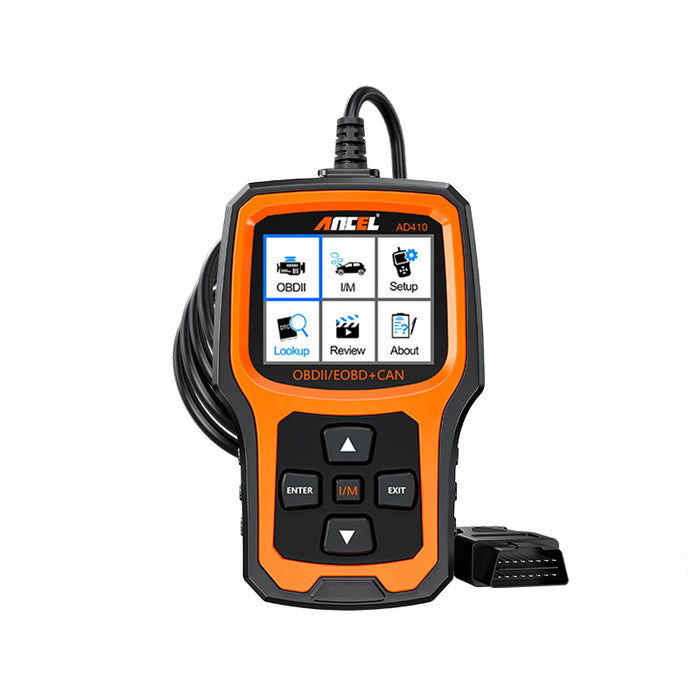
ANCEL AD410 OBD2 Scanner
An easy-to-use entry-level scanner that can quickly read and clear engine codes like P0480. Ideal for DIY car owners who want to confirm check engine light problems and monitor basic engine data.
Check Product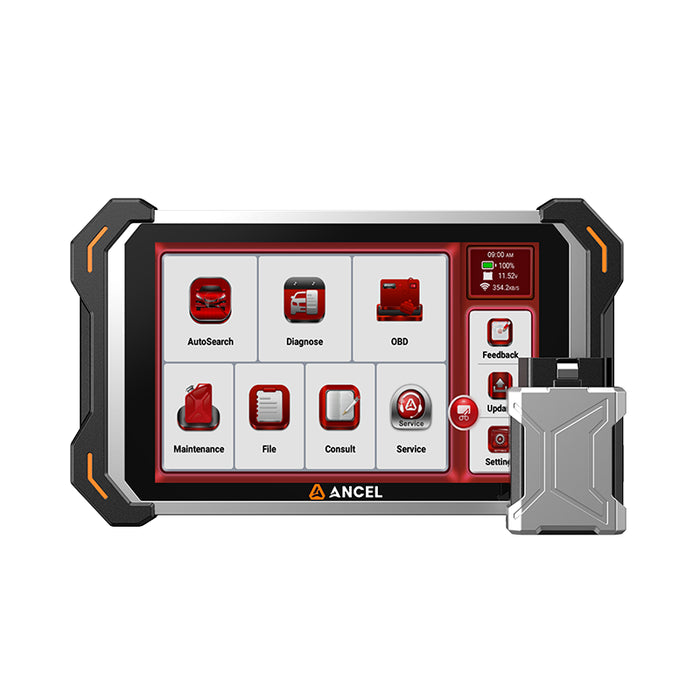
ANCEL DS600BT Professional Diagnostic Scanner
A more advanced Bluetooth diagnostic tool that supports active tests and deeper system diagnostics. Useful for confirming cooling fan commands and identifying electrical issues related to P0480.
View DetailsFAQ
What is the difference between P0480 and P0481?
P0480 refers to the primary cooling fan circuit, while P0481 refers to the secondary fan circuit.
Many vehicles use two cooling fans.
- P0480 → Fan 1 control circuit
- P0481 → Fan 2 control circuit
A failure in either circuit can trigger its respective code.
Why does my Jeep/Dodge keep blowing cooling fan fuses?
Repeated fuse failure usually indicates an electrical overload.
Possible causes include:
- Shorted cooling fan motor
- Damaged wiring harness
- Faulty fan relay
- Fan motor drawing excessive current
The cooling fan motor is often the most common cause.
How Serious Is the P0480 Code?
The P0480 code is moderately serious because it can lead to engine overheating.
If the cooling fan does not operate properly, the engine temperature may rise in traffic or hot weather.
Short drives may still be possible, but prolonged driving can cause:
- Engine overheating
- Reduced engine performance
- Potential engine damage
It is best to diagnose and repair the problem as soon as possible.
Recommend articles
Diagnostic Tool with Bluetooth: Why ANCEL DS600 BT is the Ultimate Tool for Car Enthusiasts
A Beginner’s Guide to Using the Ancel AD410 Car Diagnostic Tool
P2279 Code: Intake Air System Leak


