


What Is a Catalyst Monitor?
A catalyst monitor is a mandatory OBD-II onboard diagnostic routine. It runs self-tests on the vehicle’s catalytic converter.
The ECU evaluates exhaust gas conversion efficiency during specific driving cycles. It marks the status as Ready or Incomplete/Not Ready. This readiness state directly determines whether a vehicle passes official emissions and smog inspections.
Beyond inspection requirements, this monitor serves as an essential early warning system: it detects mild or hidden catalyst degradation that triggers no check engine light or fault codes, preventing excessive exhaust emissions, reduced engine power, and worsening fuel economy while ensuring legal road usability.
Most importantly, the catalyst monitor is a two-trip non-continuous monitor. It does not run constantly. It only activates when strict engine temperature, speed, load, and fuel level conditions are fully met.
What Does the Catalyst Monitor Check?
The catalyst monitor checks the efficiency of the catalytic converter by comparing signals from the upstream and downstream oxygen sensors.
In a properly functioning system:
- The upstream O2 sensor reacts quickly to changes in the air-fuel mixture.
- The downstream O2 sensor should remain relatively stable.
- The PCM (Powertrain Control Module) compares both signals to determine how effectively the catalytic converter is storing and processing oxygen.
If the catalytic converter is no longer working efficiently, the PCM may eventually set a fault code such as:
- P0420 — Catalyst System Efficiency Below Threshold (Bank 1)
- P0430 — Catalyst System Efficiency Below Threshold (Bank 2)
However, before any code is set, the catalyst monitor must first complete its self-test.
Catalyst Monitor vs Other OBD-II Readiness Monitors
| Monitor Type | Core Inspection Item | Key Features & Catalyst Correlation |
|---|---|---|
| Catalyst Monitor | Catalytic converter exhaust conversion efficiency |
|
| Heated Catalyst Monitor | Electric pre-heat function of catalytic converter |
|
| EVAP Monitor | Fuel tank & vapor system leakage |
|
| O2 Sensor Monitor | Upstream/downstream O2 sensor response & data accuracy |
|
| EGR Monitor | EGR valve opening & exhaust recirculation effectiveness |
|
| Misfire Monitor | In-cylinder abnormal combustion & random misfire |
|
What Does "Catalyst Monitor Incomplete" or "INC" Mean?
A Catalyst Monitor Incomplete or INC status means the vehicle's onboard computer has not yet finished testing the catalytic converter.
This does not automatically indicate a faulty catalytic converter.
Instead, it means the required conditions for the catalyst self-test have not been fully met, or the test has not completed successfully.
Many scan tools display this status as:
- INC
- Incomplete
- Not Ready
- Not Completed
All of these generally indicate that the catalyst monitor has not reached a "Ready" state.
| Status | Meaning |
| Ready | Test completed successfully |
| Complete | Test completed successfully |
| Incomplete | Test has not finished yet |
| Not Ready | Required conditions have not been met |
| N/A | Monitor not supported by the vehicle |
In most cases, Ready and Complete mean the same thing, while Incomplete and Not Ready are often used interchangeably.
How Does a Catalyst Monitor Work?
The catalyst monitor is a core OBD-II self-test that measures catalytic converter emission-reduction efficiency.
It relies on paired oxygen sensor data and PCM analysis to determine catalyst health and update readiness status.
A finished test shows “Ready”, while unmet driving conditions result in “Incomplete” or “Not Ready” status, even with no stored trouble codes.
Upstream vs Downstream Oxygen Sensors
Two oxygen sensors work in pairs to enable catalyst monitoring.
- The upstream sensor sits before the catalytic converter and tracks raw engine exhaust with fast, frequent voltage fluctuations.
- The downstream sensor is installed after the converter and reads purified exhaust output.
- The signal difference between these two sensors serves as the PCM’s core judging benchmark for catalyst performance.
How the PCM Evaluates Catalyst Efficiency
During valid drive cycles, the PCM continuously compares voltage fluctuation patterns from the front and rear O2 sensors.
A healthy catalytic converter stabilizes downstream exhaust gas, causing the rear sensor to switch slowly and maintain a clear signal gap from the upstream sensor.
If the catalyst is degraded or ineffective, downstream sensor activity mirrors the upstream sensor’s rapid fluctuation.
When signal similarity exceeds the factory threshold, the PCM flags low efficiency, triggers P0420/P0430 codes, or keeps the catalyst monitor incomplete until a valid retest.
Also read: 7 Bad Signs of an O2 Sensor All Drivers Should Know
What Is a Heated Catalyst Monitor?
Some vehicles are equipped with a heated catalyst system designed to bring the catalytic converter up to operating temperature more quickly after a cold start.
Because catalytic converters work most effectively at high temperatures, heating the catalyst sooner helps reduce emissions during the first few minutes of engine operation.
Many vehicles do not support this system. As a result, scan tools commonly display:
Heated Catalyst Monitor: N/A
This is normal and simply means the monitor is not supported by that vehicle. It does not indicate a fault and typically does not affect emissions testing.
Catalyst Monitor Not Ready But No Trouble Codes?
Core performance features of this case:
- Vehicle runs normally with no obvious driveability issues
- No Check Engine Light illuminates on dash
- Zero stored active or pending DTCs via scan tool
- Catalyst monitor still stays Incomplete / Not Ready for smog inspection
-
Unfinished full catalyst drive cycle
Short-distance driving, frequent idle-stop cannot satisfy ECU’s speed, load and temperature rules to launch catalyst self-test.
-
Unsuitable ambient air temperature
Extreme hot or cold ambient condition breaks catalyst monitor enable threshold and suspends test startup.
-
Unfinished prerequisite readiness monitors
EVAP, O2 or misfire monitor remains incomplete. Catalyst test is locked by pending monitor dependencies per OBD logic, no related error codes generated.
If the above three setup issues get ruled out, hidden component defects will be the next root causes, which we break down in the following full troubleshooting list.
Why Is My Catalyst Monitor Not Ready?
A catalyst monitor typically remains Not Ready because the vehicle has not completed the conditions required for the catalyst self-test.
Most no-code not-ready catalyst issues root in hidden hardware defects or unqualified driving conditions instead of logged faults, explaining why numerous users meet catalyst monitor not ready but no trouble codes during pre-smog inspection.
If your catalyst monitor is not ready, consider the following common causes.
Recent Battery Disconnect or ECU Reset
Disconnecting the battery resets OBD-II readiness monitors to their default state.
The same thing can happen after:
- Replacing the battery
- ECU or PCM replacement
- ECU software updates
- Power interruptions
After a reset, the catalyst monitor must run again before its status changes to Ready.
Trouble Codes Were Recently Cleared
Clearing diagnostic trouble codes (DTCs) also clears readiness monitor data.
Many drivers erase a check engine light and immediately head to an emissions test, only to discover the catalyst monitor is now Incomplete.
Even if the original fault has been repaired, the monitor must complete another drive cycle before it can become Ready.
Incomplete Drive Cycle
This is one of the most common reasons for a catalyst monitor not ready condition.
The catalyst monitor typically requires:
- A cold start
- Engine warm-up
- Steady-speed cruising
- Deceleration periods
- Specific engine load conditions
Short trips, stop-and-go traffic, or irregular driving patterns may prevent the monitor from running and keeps incomplete status.
Low Fuel Level
15%–85% fuel range is the factory baseline for catalyst monitor activation. Too little or overfilled fuel disrupts EVAP subsystem operation.
As a general rule:
- Below 15% fuel level may prevent monitor operation
- Above 85% fuel level may also delay monitor completion
Keeping the fuel tank between one-quarter and three-quarters full often helps readiness monitors complete more quickly.
Faulty Oxygen Sensors
Degraded upstream/downstream O2 sensors output unstable data without triggering fault codes.
If an upstream or downstream O2 sensor is:
- Slow to respond
- Reporting inaccurate data
- Intermittently failing
The PCM may postpone catalyst testing or reject the test results altogether.
In some cases, the catalyst monitor remains Not Ready even though no catalyst-related trouble code has been stored.
Exhaust Leaks
Exhaust leaks can alter oxygen sensor readings and make catalyst efficiency calculations unreliable.
Even a small leak:
- Near the exhaust manifold
- Ahead of the catalytic converter
- Around an oxygen sensor
may interfere with catalyst monitor operation, no related DTC in most minor leak cases..
This is especially common on older vehicles with rusted exhaust components.
Failing Catalytic Converter
Although less common than many drivers assume, a deteriorating catalytic converter can prevent successful monitor completion.
Possible signs include:
- P0420 or P0430 codes
- Sulfur or rotten egg odors
- Reduced engine performance
- Poor fuel economy
If the catalyst can no longer store oxygen efficiently, the PCM may fail the monitor test or eventually trigger a catalyst efficiency code. Monitor remains incomplete until efficiency fault hits code-trigger standard.
Engine Misfires or Fuel Trim Issues
Catalyst testing requires stable combustion conditions.
Problems such as:
- Engine misfires
-
Vacuum leaks
- Rich fuel mixtures
- Lean fuel mixtures
- Abnormal fuel trims
can affect exhaust composition and prevent accurate catalyst evaluation. Hidden combustion problems often produce zero fault codes.
In many vehicles, unresolved engine performance problems must be repaired before the catalyst monitor can complete.
Performance Tunes and ECU Modifications
Aftermarket tune rewrites factory catalyst monitor parameters or disables part of OBD test logic.
Examples include:
- Catalyst efficiency thresholds
- Oxygen sensor behavior
- Fuel mapping
- Readiness monitor logic
Some performance tunes can delay monitor completion or prevent the catalyst monitor from running altogether, resulting in fixed not-ready readiness state.
If the issue appeared after tuning, returning the vehicle to a stock calibration may be necessary.
How to get a catalyst monitor ready
If your catalyst monitor is showing Not Ready or Incomplete, the goal is to allow the PCM to complete its catalyst efficiency test under the conditions specified by the manufacturer.
In most cases, no repair is required. The vehicle simply needs to complete the correct drive cycle.
General Catalyst Monitor Drive Cycle
Follow this standardized EPA-style step sequence to trigger catalyst self-test. The exact procedure varies by vehicle, but the following pattern works for many OBD-II vehicles:
- 1. Start with a Cold Engine
Allow the vehicle to sit for several hours so the engine coolant temperature is close to ambient temperature.
Avoid clearing codes or disconnecting the battery before beginning the drive cycle.
- 2. Idle for Several Minutes
Idle 2–3 minutes until coolant reaches full operating temperature.
This allows the oxygen sensors and catalytic converter to begin reaching operating temperature.
- 3. Cruise at a Steady Speed
Drive at approximately 50–60 mph (80–95 km/h) for 10–20 minutes.
Steady cruising is one of the most important conditions for catalyst monitor testing.
- 4. Perform Controlled Deceleration
Gradual deceleration without braking hard to lower vehicle speed.
Many manufacturers use deceleration events to evaluate oxygen sensor and catalyst performance.
- 5. Continue Normal Highway Driving
Continue driving under stable conditions until all readiness monitor requirements have been met.
Many vehicles require multiple trips before the catalyst monitor changes to Ready.
Why Drive Cycles Differ by Vehicle
No universal catalyst monitor drive cycle exists. Each OEM programs customized PCM test parameters for catalyst activation.
| Vehicle Brand | OEM Specific Catalyst Drive Cycle Rules |
|---|---|
| GM | Depends on prolonged idle after full warm-up + steady highway cruise + regulated deceleration segments |
| Ford | Needs full cold start, mixed city/highway driving and long steady-throttle cruising |
| Toyota | Strict coolant & intake temperature plus fixed fuel level prerequisites to trigger catalyst test |
| Honda | Demands sustained steady cruising + mild deceleration; often needs multiple separate trips post DTC reset |
Quick tip: Always follow factory-specific drive cycle guidelines for faster catalyst readiness.
How Long Does It Take for a Catalyst Monitor to Become Ready?
General benchmark: Most vehicles need 20–100 miles or 1–3 full drive cycles. Faulty parts or poor driving habits extend the timeline significantly.
| Situation | Typical Time |
|---|---|
| After code clear | 50–100 miles |
| After battery disconnect | 50–200 miles |
| After catalyst replacement | Several drive cycles |
If the monitor remains incomplete after multiple drive cycles, further diagnosis may be necessary.
Can You Pass an Emissions or Smog Test with a Catalyst Monitor Not Ready?
| Region / Rule Category | Core Regulation Details |
|---|---|
| California |
|
| Other US States |
|
| Permitted Incomplete Monitors |
|
Catalyst Monitor Bank 1 vs Bank 2: What's the Difference?
Vehicles with V-type engines often have two cylinder banks and may monitor catalyst efficiency separately for each side.
What Is Bank 1?
Bank 1 houses cylinder #1 on V6/V8 engines, paired with its own upstream/downstream O2 sensors and dedicated catalytic converter. The corresponding catalyst monitor runs independently for this exhaust path.
What Is Bank 2?
Bank 2 covers the opposite cylinder group on split exhaust V-type engines with separate exhaust manifold and second catalytic converter, with standalone catalyst readiness tracking.
Why P0420 and P0430 Matter
These are among the most common catalyst-related trouble codes.
- P0420 = Catalyst System Efficiency Below Threshold (Bank 1)
- P0430 = Catalyst System Efficiency Below Threshold (Bank 2)
A Not Ready catalyst monitor does not automatically mean either code will appear.
However, once the monitor successfully completes its test, a failing catalyst may trigger one of these codes.
How to Diagnose a Catalyst Monitor That Won't Complete
- Check Readiness Monitor Status
- Review Pending Codes
- Check Mode $06 Data
- Monitor O2 Sensor Switching
- Verify Fuel Trim Values
- Check Catalyst Temperature and Efficiency
Improper operating temperature caused by exhaust leaks or clogged substrate prevents readiness completion.
Using an OBD2 Scanner to Check Catalyst Readiness
ANCEL series tools match full diagnostic demands for catalyst troubleshooting:
- ANCEL AD410: Entry DIY choice for fast I/M readiness check and pending code scanning.
- ANCEL DS600BT: Professional device supporting live sensor data and complete Mode 06 advanced diagnostics.
- Core required functions:
✔ I/M & Readiness Monitor inquiry
✔ Pending fault code detection
✔ Real-time live data tracking
✔ Full Mode 6 data access
- Core required functions:
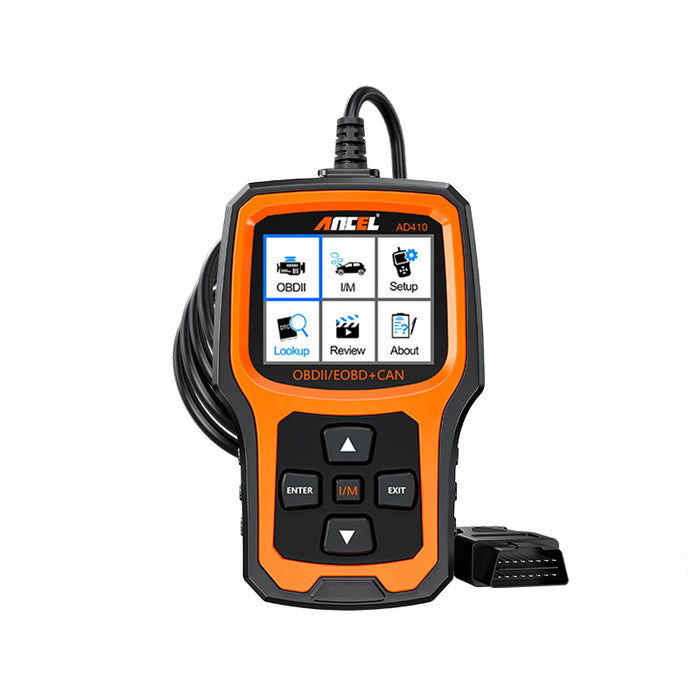
ANCEL AD410 OBD2 Scanner
Check Catalyst Monitor status, I/M Readiness, pending codes, and emissions-related faults before your next smog inspection.
Check Price →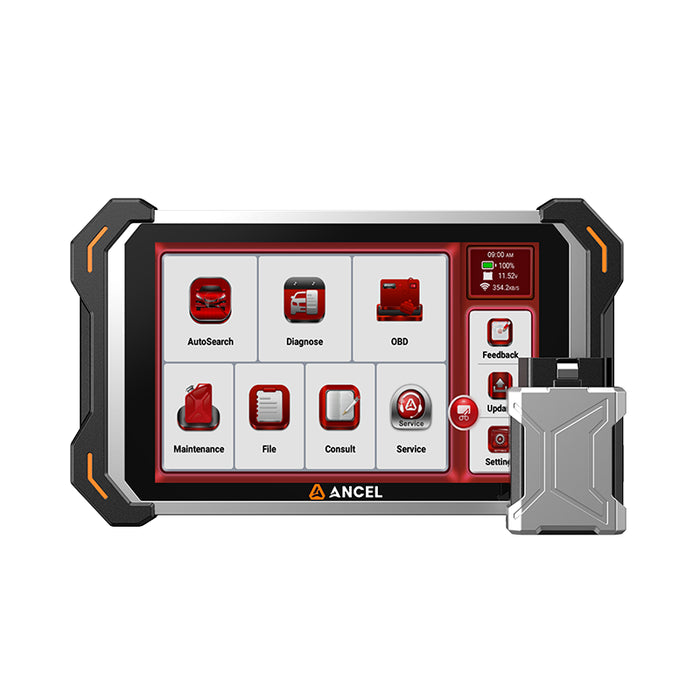 ```
```
ANCEL DS600BT
Advanced diagnostics with Live Data, Mode $06, fuel trim analysis, and readiness monitor testing for stubborn catalyst monitor issues.
View Details →FAQ
My catalyst monitor is not ready, no check engine light, and no stored trouble codes. Does this mean my catalytic converter is bad and needs immediate replacement?
Not necessarily, and immediate catalyst replacement is almost always unnecessary.
If you have no P0420/P0430 efficiency codes, the catalyst is usually still functional.
Most incomplete readiness issues stem from uncompleted OEM drive cycles, improper fuel levels, unfinished prerequisite monitors, recently cleared DTCs, or battery resets — not a failed catalytic converter.
Always rule out testing condition errors before replacing expensive exhaust parts.
I’ve driven 60mph for 40 miles multiple times, but the catalyst monitor is still incomplete. What am I missing?
Steady highway speed alone cannot complete the catalyst monitor.
OEM drive cycles require
- a full cold start,
- complete engine warm-up,
- proper idle phases,
- consistent cruising speed,
- gradual in-gear coast-down without hard braking.
Additional mandatory conditions include
- a 1/4–3/4 fuel tank level
- all accessories turned off.
Missing any step will keep the monitor incomplete.
Does Highway Driving Help Complete the Catalyst Monitor?
Yes.
Steady-speed highway driving is one of the most common requirements for catalyst monitor testing.
Many manufacturers require:
- Fully warmed engine
- Stable cruising speed
- Minimal throttle changes
- Controlled deceleration periods
Short trips and stop-and-go traffic often delay monitor completion.
Why Do Some Drive Cycles Require Coasting Without Braking?
Certain manufacturers use deceleration events to evaluate emissions-system performance.
During a coast-down event, the PCM can monitor:
- Oxygen sensor response
- Fuel cut-off operation
- EGR performance
- Catalyst efficiency
For this reason, some factory drive cycles specifically instruct drivers to decelerate without pressing the brake pedal whenever conditions allow.
Can I Pass a Smog Test if the Catalyst Monitor Is the Only Monitor Not Ready?
It depends on local regulations.
Some states allow one monitor to remain incomplete on certain model years. Others require the catalyst monitor to be Ready before testing can be passed.
Because the catalyst monitor is considered a major emissions monitor, many inspection programs do not allow it to remain incomplete.
Always verify local testing requirements before scheduling an emissions inspection.
How many miles or drive cycles does it take to finish the catalyst monitor?
There is no universal standard. Most vehicles complete readiness within 20–100 miles or 1–3 full drive cycles.
Special scenarios require more mileage:
- clearing codes typically needs 50–100 miles
- a full battery disconnect can require 50–200 miles of mixed driving
It is normal for the process to take several days of regular driving if ideal test conditions are not met.
Why is my catalyst monitor still incomplete after repeated drive cycles?
Persistent failure usually means the vehicle never met strict ECU testing criteria. Common blockers include
- incorrect drive cycle procedures
- fuel levels outside the valid range
- pending invisible DTCs
- faulty oxygen sensors
- exhaust leaks
- abnormal fuel trim values
Can I troubleshoot a stubborn incomplete catalyst monitor at home without a shop?
Yes. Use a professional OBD2 scanner with I/M readiness status, pending code detection, live O2 sensor/fuel trim data, and Mode $06 capabilities (such as ANCEL AD410, BD310, or DS600BT) to identify blocked pre-monitors and borderline sensor faults that block catalyst completion.


