


Key Points
- The throttle body controls how much air enters your engine, directly affecting power and fuel efficiency
- A bad throttle body can cause rough idle, poor acceleration, or even engine stalling
- Cleaning may fix minor issues, but severe faults require replacement
- Diagnostic tools can quickly identify throttle-related error codes
- Replacement costs typically range from $200 to $700 depending on the vehicle
What Is a Throttle Body?
A throttle body is a component in your car’s air intake system that controls the amount of air entering the engine.
It sits between the air filter and the intake manifold and plays a key role in regulating engine power. When you press the gas pedal, the throttle body opens to allow more air in, increasing engine output.
Modern vehicles typically use an electronic throttle body, which is controlled by the car’s computer (ECU), rather than a traditional cable.
What Does a Throttle Body Do in a Car?
The primary function of the throttle body is to maintain the perfect air-fuel ratio. Since an internal combustion engine is essentially a giant air pump, the throttle body acts as the gatekeeper.
-
Power Control: By varying the air intake, it determines how much power the engine produces.
-
Idle Maintenance: It ensures the engine stays running at a steady RPM when the car is stopped.
-
Efficiency: Modern Electronic Throttle Control (ETC) systems fine-tune the valve's position to maximize fuel efficiency and reduce emissions.
Where Is the Throttle Body Located
Finding the throttle body is relatively simple for most DIYers.
-
Open the hood and locate the air filter box.
-
Follow the large plastic or rubber intake hose leading away from the filter.
-
The hose will connect directly to a metal component bolted to the engine—that is your throttle body.
Location Differences by Vehicle Type
| Vehicle Type | Throttle Body Location & Notes |
|---|---|
| Inline (4‑cylinder) engines | Usually positioned at the top or side of the engine, making it easy to access and inspect. |
| V6 / V8 engines | Often located deeper in the engine bay, sometimes beneath intake covers or near the center of the engine, which may require removing additional components. |
| Electronic throttle bodies (drive‑by‑wire) | Location is similar to standard setups, but the unit includes integrated sensors, actuators, and electrical connectors. |
| Turbocharged engines | May be positioned closer to the intercooler piping rather than directly next to the air filter housing. |
How a Throttle Body Works (Simple Breakdown)
- At idle: the valve remains nearly closed
- During acceleration: the valve opens wider
- At highway speed: the valve allows maximum airflow
- The Throttle Position Sensor (TPS) monitors the valve position
- An actuator motor adjusts the valve opening
- The ECU continuously optimizes the air-fuel ratio
Symptoms of a Bad Throttle Body (Most Important Section)
If your throttle body is struggling, your car will let you know through several red flags:
- Rough Idling: The car shakes or the RPMs bounce up and down while stopped.
- Stalling: The engine dies when you come to a stop or slow down significantly.
- Hesitation during Acceleration: You press the gas, but there is a noticeable delay or a "stumble" before the car moves.
- "Limp Home Mode": The car severely limits power to protect the engine, often accompanied by a "Reduced Engine Power" dashboard message.
- Check Engine Light (CEL): Common OBDII codes include P0121 (TPS Range), P0507 (Idle Higher than Expected), or P2135 (Voltage Correlation).
ALSO READ: Bad Throttle Body Symptoms: How to Recognize and Fix It
What Causes a Throttle Body to Fail?
-
Carbon Buildup
Over time, fuel vapors, oil residue, and dirt form a sticky carbon deposit around the throttle butterfly valve, preventing it from opening and closing smoothly.
-
Electrical Failure
The internal throttle motor or Throttle Position Sensor (TPS) can wear out, short circuit, or send unstable signals to the ECU, leading to erratic engine behavior.
-
Vacuum Leaks
Cracks in the throttle body housing or a damaged gasket allow unmetered air to enter the intake system, disrupting the air-fuel mixture and confusing the ECU.
-
Mechanical Wear
Internal components such as bearings, gears, and linkage degrade with age and high mileage, causing sticking, slack, or loss of precision.
-
Contamination
Debris, oil, and moisture from the air intake system can enter the throttle body and damage sensitive internal parts, leading to premature failure.
Throttle Body Cleaning vs Replacement: How to Decide
This is one of the most important decisions for car owners.
- When Cleaning Is Enough
Mild symptoms (slight rough idle or slightly sluggish response)
No electronic fault codes
Visible carbon buildup(isible black soot/oil around the valve)
👉 A $10 can of Throttle Body Cleaner often solves this.
- When Replacement Is Necessary
Persistent issues after cleaning(eg,Limp Mode)
Electronic faults or actuator failure
Severe drivability problems
Check engine light with throttle codes
👉 In these cases, replacing the throttle body is the only reliable solution.
Throttle Body Replacement Cost
| Cost Type | DIY Replacement | Professional Help (Repair Shop/Dealership) | Notes |
|---|---|---|---|
|
Parts |
|
$150 – $500
|
Luxury/performance vehicle parts: $400-$1000+ |
| Labor | $0 | $50 – $250
|
Dealership labor fees are usually 30%-50% higher than independent shops |
| Total Cost | $50 – $500 | $200 – $700 | Luxury/multi-throttle body vehicles: $1200+ |
| Extra Costs | Potential tool purchase fees ($20-$50, e.g., wrenches, cleaner) |
|
Only incurred if additional faults are found after diagnosis |
| Core Advantages |
|
|
Beginners/those without tools are advised to choose professional help first |
| Risk Notes | Improper operation may damage ECU or intake system | Confirm price transparency in advance (avoid hidden charges) | Throttle body adaptation is required after replacement |
How to Diagnose Throttle Body Issues (Step-by-Step Guide)
Diagnosing a throttle body problem doesn’t require guesswork. With the right OBD2 scanner, you can quickly determine whether the issue is carbon buildup, sensor failure, or a faulty actuator.
🔧 Recommended ANCEL Tools for Throttle Body Diagnosis
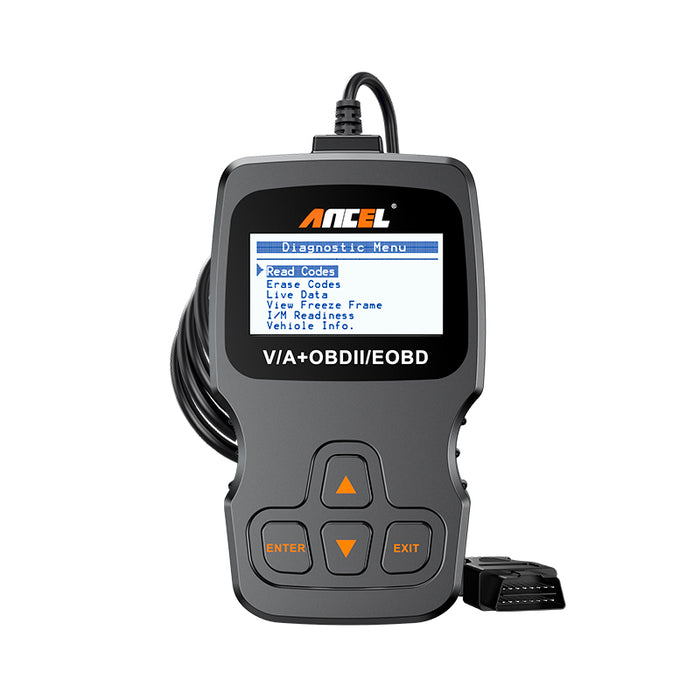
ANCEL AD310 – Basic Code Reader
A simple and reliable tool for reading and clearing throttle-related error codes. Ideal for quick checks and confirming basic issues.
👉 View Product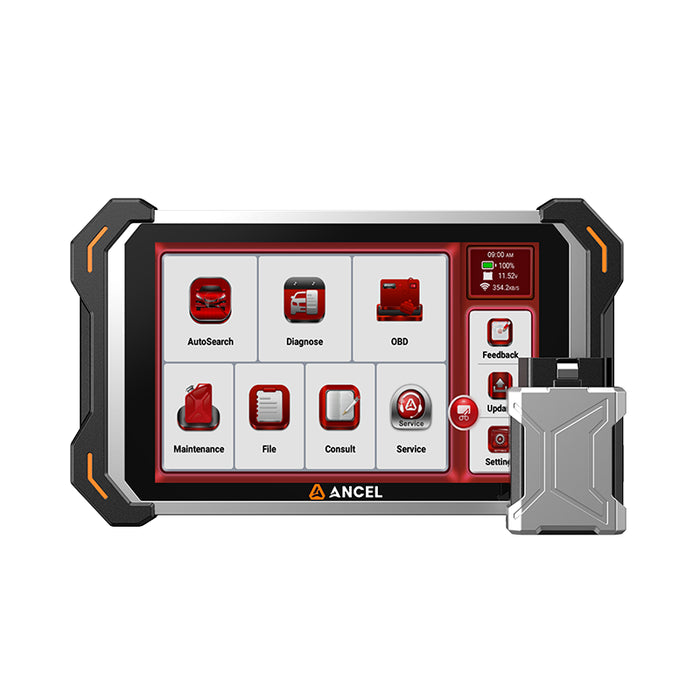
ANCEL DS600BT – Advanced Diagnostic Scanner
Supports full-system diagnostics, live data (TPS, airflow, RPM), actuator testing, and throttle body relearn functions for precise troubleshooting.
👉 View ProductStep-by-Step Guide
Step 1: Scan Throttle Body-Related Trouble Codes
Connect your ANCEL scanner to the OBD2 port and check for error codes.
Common throttle body codes:
- P0120–P0123 → Throttle Position Sensor (TPS) circuit issues
- P0220–P0223 → Secondary TPS faults (dual sensor systems)
👉 Quick diagnosis logic:
- No codes + mild symptoms → likely dirty throttle body (cleaning needed)
- Specific TPS or actuator codes → electrical or mechanical failure (replacement likely)
Step 2: Monitor Live Data (Key Parameters)
Using ANCEL’s live data feature, check the following:
Throttle Position (%)
- Should increase smoothly when pressing the accelerator
- Jumping or unresponsive values → sensor or actuator issue
TPS Voltage
- Normal range: ~0.5V (idle) → ~4.5V (full throttle)
- Out-of-range or unstable voltage → faulty sensor
Airflow (MAF Data)
- Abnormal airflow at idle may indicate:
- Vacuum leaks
- Sticking throttle valve
Idle RPM
- Normal: 600–1000 RPM (varies by vehicle)
- Fluctuation or instability → possible carbon buildup or adaptation issue
Step 3: Perform Active Tests (Advanced Diagnostics)
With professional tools like ANCEL DS600BT, you can go beyond basic scanning.
Throttle Actuator Test
On supported vehicles, you can send commands to open or close the throttle valve and observe its response. Delayed or stuck movement may indicate actuator issues.
ECU Signal Verification
By analyzing live data and component feedback, you can assess whether the throttle system is functioning correctly and responding to ECU commands.
Detect Hidden Issues
The scanner helps identify abnormal airflow or engine behavior, which may indicate issues such as vacuum leaks or throttle sticking.
NOTE: Not all vehicles support bidirectional throttle control — always check compatibility before testing.
Step 4: Throttle Body Relearn (Critical After Cleaning or Replacement)
After cleaning or replacing the throttle body, the ECU still remembers old parameters.
👉 This is where many DIY repairs fail.
With ANCEL scanners, you can:
- Trigger throttle body relearn/reset
- Recalibrate airflow and idle settings
- Prevent rough idle or stalling after repair
👉 Result:
Your engine runs smoothly as if the throttle body were new.
Can You Drive With a Bad Throttle Body?
It is not recommended.
Driving with a severely bad throttle body is unsafe—stalling, sudden power loss, or unresponsive acceleration can lead to accidents. If only mild symptoms are present, you may drive short distances (under 10 miles) to a repair shop, but avoid highway driving, heavy loads, and long trips. For any severe symptoms, towing is the safest option to prevent accidents.
To help you judge risk levels:
Mild Symptoms (Short-Distance Driving Only, to a Repair Shop):
- Slight rough idle (minor engine shaking at stoplights)
- Mild hesitation when accelerating (no sudden loss of power)
- Slight decrease in fuel efficiency (no dramatic MPG drop)
- Intermittent, faint Check Engine light (no persistent codes for electrical failure)
Severe Symptoms (Do NOT Drive—Arrange Towing):
- Frequent stalling (engine cuts out at idle or low speeds)
- Sudden loss of power while driving (especially at highway speeds)
- Unresponsive acceleration (car won’t speed up when pressing the gas pedal)
- Extreme rough idle (engine shakes violently or nearly stalls)
- High, erratic idle RPM (consistently above 1,500 RPM)
- Persistent Check Engine light with codes like P2101 (throttle actuator failure) or P0123 (TPS high input)
FAQ
What does a throttle body do?
A throttle body controls the amount of air entering the engine. Its primary job is to control the amount of air that enters the engine based on how hard you press the gas pedal. By regulating this airflow, it works with the ECU to determine the engine's power, speed, and fuel efficiency.
What happens when a throttle body goes bad?
A failing throttle body causes rough idle, poor or unresponsive acceleration, stalling, high RPM, reduced fuel economy, and often triggers a check engine light.
In modern cars, a bad throttle body will often trigger "Limp Mode," which severely limits engine power to prevent further damage.
How do I know if my throttle body needs cleaning or replacement?
- Symptoms are mild, such as slight rough idle, minor hesitation, or slow throttle response
- You see visible carbon buildup, black soot, or oily residue inside the throttle body
- Your OBD2 scanner shows no electrical fault codes related to the TPS sensor or throttle motor
- The issue improves temporarily after cleaning
- Problems still persist after a full, proper cleaning
- Your scanner shows electronic fault codes (such as P2101, P2135, or TPS-related codes)
- The internal sensors, motor, or electronics have failed
- The throttle plate is stuck, warped, damaged, or no longer moves smoothly
What kills the throttle body?
The most common causes of throttle body failure include carbon buildup, electrical or sensor failure, contamination from oil or dirt, and normal wear over time.
Can a dirty throttle body cause transmission problems?
Indirectly, yes. Modern automatic transmissions rely on the throttle position signal to decide when to shift gears. If a dirty throttle body sends "jumpy" or inaccurate data to the car's computer, you may experience jerky shifts, delayed gear engagement, or searching for gears.
Can a bad throttle body cause misfire?
Yes. An engine needs a precise "Air-Fuel Ratio" to ignite properly. If the throttle body is stuck or sending the wrong signals, the mixture becomes too "lean" (too much air) or too "rich" (too much fuel). This imbalance can prevent the spark plug from firing correctly, resulting in a noticeable engine misfire.
Recommended Reading:
When to Relearn and Reprogram Your Car's Throttle Body
What Does a Throttle Body Do? A Complete Guide


