


If your vehicle is struggling with a rough idle or throwing an EGR-related code like P1400 or P1401, a malfunctioning DPFE sensor is often the hidden culprit.
Short for Differential Pressure Feedback EGR, this sensor measures exhaust gas flow to help the engine computer control emissions and maintain smooth acceleration. While commonly confused with the EGR valve itself, the DPFE sensor is a distinct pressure-sensing unit—frequently found on Ford Rangers, Explorers, and other Ford/Mazda models.
This guide explains the DPFE sensor’s function, location, symptoms, common mix-ups, and how to diagnose the problem before replacing parts.
What Does DPFE Stand For?
DPFE stands for Differential Pressure Feedback EGR. The sensor is used primarily on Ford vehicles and some related applications to monitor exhaust gas recirculation flow.
Unlike the EGR valve, which controls exhaust gas flow, the DPFE sensor is a feedback sensor. It measures the pressure difference across a restriction in the EGR passage and sends that information to the powertrain control module (PCM).
Relevant reading: What is difference? ECM Vs. PCM
How a DPFE Sensor Measures EGR Flow

A typical DPFE system uses two pressure hoses connected to the EGR tube on opposite sides of a calibrated restriction.
The measurement process is:
-
EGR valve opens: Exhaust gas flows through the EGR passage.
-
Pressure difference develops: The restriction creates a pressure drop as exhaust gas passes through it.
-
DPFE measures the pressure difference: The sensor compares pressure from the two reference hoses.
-
Sensor sends a signal: The DPFE converts the differential pressure into an electrical signal for the PCM.
-
PCM evaluates EGR flow: The PCM uses the signal to determine whether the expected amount of EGR is flowing.
Key diagnostic point: A DPFE fault does not necessarily mean the sensor itself has failed. Clogged EGR passages, damaged or blocked pressure hoses, exhaust leaks, wiring faults, or connector problems can also cause an incorrect DPFE signal.
What Does a DPFE Sensor Do?
How It Helps the ECU Monitor EGR Flow
The PCM does not rely only on an EGR command. It also needs feedback to confirm that the expected amount of exhaust gas is actually flowing.
The DPFE sensor provides that feedback. If carbon buildup, restricted passages, damaged hoses, or another fault changes actual EGR flow, the measured pressure difference may no longer match what the PCM expects.
Why DPFE Problems Can Trigger Check Engine Light
A faulty DPFE signal can trigger the check engine light when the ECU/PCM detects abnormal EGR feedback or a mismatch between expected and measured EGR flow.
The problem may come from the DPFE sensor itself or from another part of the EGR feedback system.
Common causes include:
- Faulty DPFE sensor: The sensor produces an inaccurate, unstable, or implausible pressure signal.
- Damaged or blocked pressure hoses: Leaks, cracks, melting, or blockage can prevent accurate pressure measurement.
- Carbon buildup: Deposits can restrict the EGR passage or metering area and alter the expected pressure difference.
- Wiring or connector faults: Open circuits, shorts, corrosion, or poor connections can distort the sensor signal.
- EGR valve or passage problems: The actual EGR flow may not match what the ECU/PCM expects.
When the ECU/PCM detects a persistent abnormality, it can store a Diagnostic Trouble Code (DTC) and illuminate the Check Engine Light (MIL).
Diagnostic takeaway: A DPFE-related code does not automatically mean the DPFE sensor needs to be replaced. The sensor, pressure hoses, EGR passages, wiring, and actual EGR operation should be checked before replacing parts.
Common Symptoms of a Faulty DPFE Sensor
A faulty DPFE sensor can provide incorrect EGR flow feedback, which may lead to drivability problems, reduced engine performance, increased emissions, or a Check Engine Light. However, these symptoms can also come from the EGR valve, damaged DPFE hoses, restricted EGR passages, or wiring and connector faults.
Engine Performance and Driveability Issues
- Rough Idle or Engine Stalling: Incorrect EGR feedback can contribute to improper EGR operation. Excessive EGR flow at idle can cause rough running or, in some cases, engine stalling.
- Engine Hesitation or Stumbling: Incorrect EGR flow can interfere with normal engine operation and cause hesitation, stumbling, or reduced throttle response during acceleration.
- Reduced Engine Performance: When actual EGR flow differs from what the PCM expects, the engine may experience reduced performance under certain operating conditions.
- Engine Knocking or Pinging: Insufficient EGR flow under conditions where EGR is expected can contribute to higher combustion temperatures and may increase the tendency for spark knock on some engines.
Fuel Economy and Emissions Problems
- Poor Fuel Economy: Incorrect EGR operation can affect combustion efficiency and may contribute to increased fuel consumption.
- Increased NOx Emissions: EGR helps reduce combustion temperatures and NOx formation. Insufficient or incorrect EGR flow can therefore contribute to higher NOx emissions.
- Failed Emissions Test: An EGR-related fault may increase emissions or prevent the vehicle from meeting applicable emissions requirements.
Check Engine Light
A DPFE-related fault can trigger the Check Engine Light when the PCM detects an abnormal sensor signal or a mismatch between expected and detected EGR flow.
These symptoms can point to an EGR or DPFE-related problem, but they do not confirm sensor failure. Scan for trouble codes and inspect the EGR/DPFE system before replacing parts.
Where Is the DPFE Sensor Located?

The DPFE sensor is typically located near the EGR system and connected to the EGR tube by two small pressure hoses. The exact location varies by vehicle year, engine, and EGR system design.
Common DPFE Sensor Location
Look for a small electronic sensor with:
- Two pressure hoses connected to the EGR tube or metering orifice
- One electrical connector
- A mounting position near the EGR system
The two hoses are the most useful way to identify the DPFE sensor. If you can trace both hoses back from the EGR tube, they should lead to the DPFE sensor.
Do not identify the sensor by location alone. Other pressure sensors may be installed nearby. Confirm that the sensor has two pressure connections associated with the EGR passage.
DPFE Sensor Location on Ford Ranger and Ford Explorer
Ford Ranger and Ford Explorer models commonly place the DPFE sensor near the EGR system, but the exact position varies by model year and engine.
On some applications, the sensor is mounted close to the EGR tube on the side or rear of the engine. Other applications may position it farther from the EGR valve while keeping the two pressure hoses connected to the EGR passage.
For a specific Ranger or Explorer, use the year and engine to confirm the exact location. Do not assume that all generations use the same mounting position.
What About Mercedes and Other Vehicles?
Not every vehicle uses a Ford-style DPFE sensor. Other manufacturers may use different EGR pressure or flow sensors with different names, designs, and locations.
Mercedes-Benz and other vehicles may have an EGR differential pressure sensor, but this should not automatically be treated as the same component as a Ford DPFE sensor.
This distinction is especially important on diesel vehicles, which may also use a DPF differential pressure sensor.
Identification rule: Before replacing a sensor, confirm three things:
-
It is part of the EGR feedback system.
-
Its pressure connections are associated with the EGR passage.
-
The sensor matches the specific vehicle and engine application.
DPFE Sensor Hoses: What They Do and Why They Fail
DPFE sensor hoses carry the two pressure signals the sensor uses to monitor EGR flow. A cracked, melted, clogged, disconnected, or incorrectly routed hose can produce an incorrect DPFE signal even when the sensor itself is working properly.
Cracked, Melted, Clogged, or Reversed Hoses
A typical DPFE system uses two pressure hoses connected to different points of the EGR passage. The pressure difference between these points provides the feedback signal used to evaluate EGR flow.
Common hose problems include:
- Cracked or leaking: A damaged hose can cause pressure loss and an inaccurate DPFE reading.
- Melted or heat-damaged: Excessive heat near the EGR system can soften, deform, or damage the hose and affect pressure measurement.
- Clogged: Carbon deposits or debris can restrict the hose or its connection point and prevent accurate pressure transfer.
- Disconnected: A loose or disconnected hose can cause an abnormal pressure signal.
- Reversed: Connecting the two hoses to the wrong ports can invert the expected pressure relationship and produce an incorrect DPFE signal.
Diagnostic clue: If the DPFE signal does not match expected EGR operation, inspect both hoses for leaks, blockage, heat damage, and correct routing before replacing the sensor.
Check the Hoses Before Replacing the Sensor
A hose fault can mimic DPFE sensor failure. Before replacing the sensor, inspect both hoses for cracks, melting, blockage, kinks, loose connections, and incorrect routing.
Also check the EGR pressure ports for carbon buildup or restriction. A new DPFE sensor will not correct an inaccurate pressure signal caused by damaged hoses or blocked passages.
Recommended order:
inspect hoses and pressure ports → check wiring and connector → evaluate the DPFE signal and EGR operation → replace the sensor only if testing confirms failure.
DPFE Sensor vs. EGR Valve vs. DPF Differential Pressure Sensor
These three components perform different jobs: the DPFE sensor monitors EGR flow, the EGR valve controls EGR flow, and the DPF differential pressure sensor monitors pressure across the diesel particulate filter.
| Attribute | DPFE Sensor | EGR Valve | DPF Differential Pressure Sensor |
|---|---|---|---|
| Primary Function | Monitors EGR flow using differential pressure feedback | Controls the amount of exhaust gas recirculated into the intake | Monitors pressure difference across the DPF |
| Component Type | Electronic feedback sensor | Mechanical or electronically controlled valve | Electronic pressure sensor |
| What It Does | Measures pressure difference and sends an EGR feedback signal to the PCM | Controls the EGR passage to regulate exhaust gas flow | Measures pressure difference before and after the DPF |
| Typical Application | Common on certain Ford and related applications using a DPFE-based EGR system | Used on many gasoline and diesel engines equipped with EGR | Primarily used on diesel engines equipped with a DPF |
| Typical Location | Near the EGR system, connected to the EGR passage by two pressure hoses | Directly installed in the EGR flow path | Connected by pressure lines to exhaust points before and after the DPF |
| What a Fault Can Cause | Incorrect EGR feedback, EGR-related DTCs, rough running, hesitation, or reduced performance | Excessive or insufficient EGR flow, rough idle, hesitation, or stalling | Incorrect DPF pressure readings, regeneration problems, or DPF-related DTCs |
Quick identification tip: The EGR valve controls exhaust gas flow, while the DPFE sensor only monitors it. A DPF differential pressure sensor belongs to the particulate-filter system, not the EGR feedback system. Trace the pressure hoses or lines to confirm which system the sensor belongs to.
How to Diagnose a Bad DPFE Sensor Before Replacing It
Do not replace a DPFE sensor based on symptoms or a single trouble code alone. A cracked pressure hose, restricted EGR passage, faulty EGR valve, wiring problem, or connector fault can produce similar symptoms.
A reliable diagnostic sequence is: scan for DTCs → check live data → inspect hoses and wiring → test the sensor and EGR system against vehicle-specific specifications.
Scan for EGR-Related Trouble Codes
Connect an OBD2 scanner and check for stored and pending Diagnostic Trouble Codes (DTCs).
Common EGR-related codes include:
- P0401 — Insufficient EGR Flow: The PCM detects less EGR flow than expected.
- P0402 — Excessive EGR Flow: The PCM detects more EGR flow than expected.
These codes can be associated with a DPFE sensor problem, but they can also result from restricted EGR passages, damaged pressure hoses, an EGR valve problem, exhaust leaks, or wiring and connector faults.
Diagnostic takeaway: A P0401 or P0402 code identifies an EGR flow problem; it does not by itself prove that the DPFE sensor has failed.
Check Live Data When Supported
If the scan tool provides DPFE or EGR-related PIDs, monitor the sensor signal while the engine is running.
Look for:
- Stable baseline: The sensor should produce a plausible reading under the specified test conditions.
- Signal response: The DPFE reading should change when EGR flow changes, if the vehicle's diagnostic procedure calls for this test.
- Unexpected or erratic readings: A signal that remains fixed, changes unpredictably, or does not respond as expected can indicate a sensor, hose, wiring, or EGR-flow problem.
- Commanded vs. actual operation: If the scan tool supports these PIDs, compare commanded EGR operation with the available feedback.
Do not use a universal DPFE voltage range as a pass/fail test. Sensor output varies by vehicle, sensor design, and model year.
Best practice: Compare the measured value and signal response with the manufacturer's specifications for the specific vehicle.
Inspect Hoses, Wiring, and Connectors
Inspect the DPFE sensor and its supporting components before performing further electrical tests.
Check the DPFE pressure hoses for:
- Cracks, leaks, melting, or heat damage
- Kinks or collapsed sections
- Blockage or restricted passages
- Loose or disconnected ends
- Incorrect routing or connection
Check the EGR pressure ports and passage:
- Look for visible carbon buildup or blockage.
- Make sure the pressure connections are open and properly connected.
- Follow the vehicle-specific service procedure for cleaning if a restriction is found.
Check the wiring and connector:
- Look for corrosion or damaged terminals.
- Check for broken wires, damaged insulation, or loose connections.
- Make sure the connector is fully seated.
A fault in any of these areas can cause an incorrect DPFE signal even when the sensor itself is functioning normally.
Use a Multimeter or Vacuum Pump for Further Testing
If the initial inspection does not identify the cause, use a digital multimeter (DMM), vacuum pump, or other test equipment specified for the vehicle.
A multimeter can help check:
- Sensor reference voltage
- Ground circuit
- Signal voltage
- Wiring continuity
- Open or short circuits
If the vehicle uses a vacuum-operated EGR valve and the service procedure specifies a vacuum test, a hand vacuum pump can be used to verify EGR valve operation and observe whether the DPFE signal responds to the resulting change in EGR flow.
Important: Do not assume that every DPFE system uses the same reference voltage, signal voltage, vacuum specification, or test procedure. Follow the manufacturer's service information for the specific vehicle.
Diagnostic conclusion: If the EGR system responds as expected but the DPFE signal remains outside the specified range or fails to respond as required, and the hoses, pressure ports, wiring, and connector have been verified, the DPFE sensor becomes a strong candidate for replacement.
Best diagnostic order:
DTC scan → live data → hose and EGR inspection → wiring/connector checks → sensor and EGR testing → replace the DPFE sensor only when test results support sensor failure.
How an ANCEL OBD2 Scanner Can Help Diagnose DPFE and EGR Problems
An OBD2 scanner can help with the first stages of DPFE diagnosis by retrieving EGR-related trouble codes and, on supported vehicles, displaying relevant live data.
For drivers who want more diagnostic capability than a basic code reader, the ANCEL DS600 BT is a suitable option. It provides full-system diagnostics and live-data viewing on supported vehicles, making it useful when an EGR-related problem needs to be investigated beyond simply reading and clearing a fault code.
With a compatible ANCEL scanner, you may be able to:
- Read stored and pending EGR-related DTCs such as P0401 and P0402.
- View supported DPFE or EGR-related live-data parameters.
- Compare available EGR commands and feedback data when supported by the vehicle.
- Check related engine data that may help provide context for an EGR-flow problem.
- Clear codes after repairs and check whether they return.
For example, if a vehicle stores a P0401 insufficient-EGR-flow code, the DS600 BT can help you review the available EGR-related data before moving on to physical checks of the DPFE hoses, passages, wiring, and sensor.
An auto scan tool cannot confirm every mechanical fault by itself. DPFE-related diagnosis should still combine scan data with hose and passage inspection, electrical testing, and the manufacturer's vehicle-specific procedures.
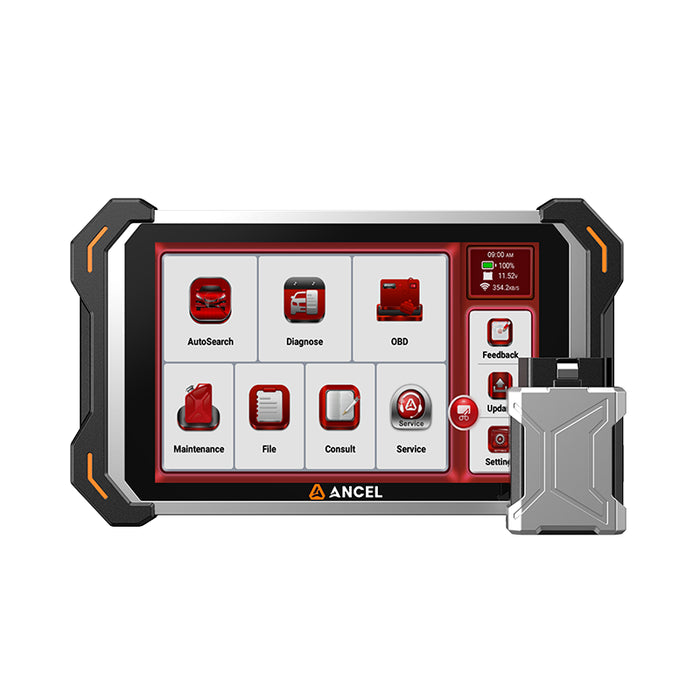
Need More Than a Basic Code Reader?
The ANCEL DS600 BT provides full-system diagnostics and live-data viewing on supported vehicles, helping you investigate EGR-related faults beyond simply reading and clearing trouble codes.
Check DS600 BT Features & CompatibilityDPFE Sensor Replacement Cost and Price
The cost of replacing a DPFE sensor depends on the vehicle, sensor type, and whether you replace it yourself or pay for labor.
Typical DPFE Sensor Price
| Cost Factor | Typical Cost / Consideration | What to Know |
|---|---|---|
| Replacement DPFE sensor | About $20–$60 | Price varies by vehicle, brand, and part quality |
| OEM sensor | Usually higher | Check the exact vehicle application and part number |
| Aftermarket sensor | Often lower | Choose a reputable part that matches the vehicle |
| DIY replacement | No labor charge | Mainly requires access to the sensor and basic hand tools |
| Professional replacement | Part + labor | Total cost depends on vehicle access and shop labor rates |
Before buying: Confirm the exact part number and vehicle application. A DPFE-related fault code does not necessarily mean the sensor itself has failed.
Why Diagnosis Matters Before Buying a New Sensor
A DPFE sensor can produce symptoms or fault codes similar to problems elsewhere in the EGR system. Check these items before replacing the sensor:
- Pressure hoses: Look for cracks, melting, blockage, disconnection, or incorrect routing.
- EGR passages: Check for carbon buildup or restricted flow.
- Wiring and connector: Look for corrosion, loose terminals, or damaged wiring.
- DPFE sensor: Confirm that testing supports sensor failure before replacement.
- EGR valve: Check it if the diagnostic results point to an EGR flow problem.
DPFE Sensor Replacement: DIY Checklist
If testing confirms that the sensor is faulty, use this basic checklist:
-
Verify the replacement sensor matches the vehicle and part number.
-
Inspect the two pressure hoses before disconnecting them.
-
Check the pressure ports for blockage or carbon buildup.
-
Reconnect both hoses to the correct ports and secure the electrical connector.
-
Clear the related DTCs after installation.
-
Run the vehicle and verify that the fault code or symptoms do not return.
Key takeaway: A DPFE sensor itself may be relatively inexpensive, but replacing the wrong part can add unnecessary cost. Diagnose the sensor, hoses, EGR passages, and wiring before buying a replacement.
FAQ:
How do I know if my DPFE sensor is bad?
A bad DPFE sensor should be confirmed through testing, not symptoms or a trouble code alone.
Look for three types of evidence:
- Trouble codes: EGR-related DTCs can indicate a flow, feedback, or sensor-circuit problem, but the code does not automatically identify the DPFE sensor as the failed component.
- Driveability symptoms: Rough idling, hesitation, stumbling, reduced performance, or knocking/pinging may occur when EGR operation is incorrect.
- Live data or electrical tests: On supported vehicles, check whether the DPFE signal changes as expected under the specified operating conditions. Always compare readings with vehicle-specific specifications rather than using a universal voltage range.
Key point: Check the DPFE sensor, pressure hoses, EGR passages, wiring, and connectors before replacing the sensor.
Can I drive with a bad DPFE sensor?
You may be able to drive for a short distance, but a suspected DPFE or EGR fault should not be ignored.
A faulty DPFE system can affect EGR control and may cause drivability problems, reduced fuel economy, or increased emissions. If the vehicle has severe hesitation, stalling, or other significant performance problems, avoid continued driving and have the system diagnosed.
Is a DPFE sensor only used on Ford vehicles?
The term DPFE is primarily associated with Ford EGR systems, but similar EGR differential-pressure sensors are used on some other vehicles.
Ford commonly uses the term DPFE (Differential Pressure Feedback EGR) for a sensor that monitors pressure differences in the EGR system. Other manufacturers may use different names, sensor designs, or diagnostic strategies for monitoring EGR flow.
Do not confuse an EGR differential-pressure sensor with a DPF differential-pressure sensor. A DPF pressure sensor monitors pressure across the diesel particulate filter, while a DPFE/EGR pressure sensor is used to monitor EGR flow.


