


Takeaway:
- P2279 = Intake air system leak (unmetered air bypassing MAF/MAP sensors), causing lean air-fuel ratios, performance issues, and Check Engine Light.
- Brand-specific triggers (VW/Audi PCV diaphragm failure, Honda intake boot aging) and cold-start-worsened symptoms simplify targeted diagnosis.
What Is the P2279 Code?
What Does “Bank 1” Mean in P2279?
Bank 1 refers to the side of the engine that contains cylinder 1.
When P2279 is reported as “Bank 1”, it means the intake air leak is detected on that side of the engine. This is most relevant on V-type engines and some turbocharged setups where intake components are split between banks. On inline engines, Bank 1 usually refers to the entire engine.
Related reading: P0420: Catalyst System Efficiency Below Threshold (Bank 1)
What Does “Intake Air System Leak Detected” Actually Mean?
What Is Unmetered Air?
P2279 vs. Vacuum Leak: What’s the Difference?
- P2279: Specifically refers to leaks in the intake air system (affecting air-fuel ratio) that the ECU detects via MAF/MAP/O2 sensor data.
- Vacuum leak: A broader term for any leak in the engine’s vacuum system (e.g., brake booster hose, PCV valve). Some vacuum leaks (e.g., small brake booster leaks) may not disrupt the air-fuel ratio enough to trigger P2279.
Related reading: What Causes Code P0068: MAP/MAF Throttle Position Errors
Common Symptoms of a P2279 Code
Core Universal Symptoms (All Vehicles)
- Check Engine Light (CEL) illumination: The most consistent symptom—ECU detects air-fuel ratio imbalance and stores the P2279 code.
- Rough idle: Engine shakes or fluctuates at idle (unmetered air causes uneven combustion).
- Acceleration hesitation: Lag or "flat spot" when pressing the gas pedal (lean mixture fails to deliver sufficient power).
- Lean fuel mixture indicators: Increased fuel consumption, exhaust popping, or a "lean" secondary code (e.g., P0171/P0174) — all caused by too much air relative to fuel.
Cold Start vs. Warm Start Differences
Temperature directly impacts symptom severity, helping distinguish P2279 from other codes:
- Cold starts: Symptoms worsen (rough idle, severe hesitation). Cold air thickens the intake charge, amplifying the lean mixture effect—unmetered air disrupts combustion more noticeably.
- Warm starts: Symptoms may temporarily improve (idle stabilizes, hesitation eases) but never disappear. Warm engine components expand slightly, reducing small leak gaps—but the Check Engine Light remains on.
Brand-Specific Symptom
Honda (e.g., 2012 Odyssey, Civic, Accord): Normal idle but occasional stalling or hesitation, especially after recent MAP sensor replacement or timing belt service. This is due to Honda’s sensitive intake pressure monitoring system misinterpreting leaks or faulty new parts.
What Causes a P2279 Code?
P2279 always stems from unmetered air entering the intake system—air that bypasses the MAF/MAP sensor, disrupting the engine’s air-fuel ratio. Below are the most common causes (universal + brand-specific), with key notes to avoid misdiagnosis:
Most Common Causes (All Vehicles)
These issues account for 70% of P2279 cases, regardless of make/model:
- Intake hose cracks/aging: Flexible intake hoses degrade over time (heat, vibration) or crack from impact—allowing unmetered air to seep in.
- Loose clamps: Failed or loose hose clamps (on intake tubes, vacuum lines) create gaps for air leaks.
- PCV valve/hose issues: A stuck-open PCV valve or cracked PCV hose vents excess crankcase air into the intake (unmetered).
- Intake manifold gasket leak: Deteriorated gaskets between the intake manifold and cylinder head break the seal, causing air leakage.
- Brake booster hose leak: A cracked brake booster vacuum hose pulls in unmetered air (symptoms often include spongy brakes alongside P2279).
Brand-Specific Causes You Should Know
Different manufacturers have unique intake system designs—here are the top brand-specific triggers:
- PCV diaphragm failure: The positive crankcase ventilation (PCV) diaphragm in VW/Audi engines (e.g., TSI/TFSI) commonly tears, creating a vacuum leak that triggers P2279.
- Turbo inlet hose leaks: Turbocharged models (e.g., VW Jetta, Audi A4) often develop cracks in the turbo inlet hose (near the intercooler)—a high-stress area prone to wear.
- Key note: Avoid misdiagnosing MAF sensor failures; these brands’ intake leaks are far more likely to cause P2279 than faulty sensors.
Honda
- Common triggers: Aging intake boots, throttle body gasket leaks, faulty intake pressure sensors, or valve cover gasket issues.
- Key misjudgment: Broken air cleaner case clips don’t cause leaks—only cracked housings do.
- Key note: New aftermarket MAP sensors may be defective; always cross-verify with fuel trim data.
- Intake resonator leaks: The plastic intake resonator (part of the air intake system) cracks easily on older models (e.g., C-Class, E-Class)—a hidden leak point often overlooked.
- Crankcase ventilation issues: Failed crankcase ventilation valves (CCV) or cracked hoses vent unmetered air into the intake, common in Mercedes diesel and supercharged models.
- Key note: Supercharged Mercedes (e.g., AMG variants) may also develop leaks in the supercharger-to-intake manifold seals.
How Serious Is the P2279 Code?
P2279 is usually moderate in severity, but ignoring it can lead to engine performance issues over time.
While P2279 does not typically cause immediate engine failure, prolonged driving with an intake air leak can lead to poor drivability, increased fuel consumption, and higher exhaust emissions. In some cases, extended lean operation may contribute to engine or catalytic converter damage.
Can I Still Drive with a P2279 Code?
Yes, you can usually drive short distances, but it is not recommended to delay repairs.
Many vehicles with a P2279 code will still run, especially at light throttle.
However, symptoms often worsen under acceleration or boost. Continuing to drive with an unresolved intake air leak increases the risk of reduced performance, failed emissions tests, and additional fault codes appearing.
How to Diagnose a P2279 Code (Step-by-Step)
DIY Diagnostic Tools & Preparation
Essential Tools
- OBD2 scanner
- Low-cost leak detectors: Cigarette or propane tank + rubber hose
- Basic tools: Flashlight (for visual inspections)
Pre-Diagnostic Checks
- Retrieve freeze frame data for the P2279 code (records vehicle conditions when the code triggered)
- Document recent maintenance: Note if MAP sensors, timing belts, or intake components were recently replaced (avoids misjudging new parts)
Step-by-Step Diagnostic Process
1. Confirm the Fault Code (Eliminate Intermittent Issues)
- Clear the P2279 code with an OBD-II scanner, then take a short test drive (10-15 miles).
- If the code reappears, it indicates a persistent leak( for example, if it is labeled “Bank 1”—make a note of it, as this identifies the engine side where the leak is most likely occurring.)
- if not, the issue may be intermittent (e.g., temperature-dependent hose cracks).
2. Zero-Cost Preliminary Inspection
 This circular port is a key intake system connection point. Inspect its seal gasket and clamps for looseness or cracks.
- Visual + Manual Check: Examine intake hoses, vacuum lines, and gaskets for cracks, looseness, or aging. Gently wiggle hoses while the engine idles—listen for air rushing sounds or watch for idle fluctuations (signs of leaks).
- Rule Out False Alarms: A broken air cleaner case clip alone won’t trigger P2279 (per 2012 Honda Odyssey owner feedback). Only suspect the airbox if the housing itself is cracked or poorly sealed.
3. DIY Leak Localization + Professional Smoke Test
- Low-Cost Cigarette Smoke Method (For Beginners)
Engine off: Light a cigarette and hold it near potential leak points (intake hose connections, throttle body, vacuum line junctions). If smoke is sucked into the system, the spot is leaking—unmetered air is entering the intake.
- Professional Smoke/Pressure Test (For Hidden/Complex Leaks)
Use a smoke machine to pressurize the intake system: Smoke will actively escape from even tiny leaks (e.g., worn intake manifold gaskets).
However, passing a smoke test does not always rule out the problem.
In real-world cases, P2279 can be especially tricky on turbocharged or modified vehicles. Some drivers report passing a smoke test with no visible leaks, only to have the code return under heavy boost. In these situations, the PCV system is often the root cause, as leaks may only appear under higher pressure rather than at idle.
4. Data Validation with OBD2 Scanner
Use your good scan tool to monitor live data from:
- MAF (Mass Air Flow) sensor
- MAP (Manifold Absolute Pressure) sensor
- Short-term and long-term fuel trims (STFT / LTFT)
Abnormally high positive fuel trims at idle or during light throttle often indicate a lean condition caused by unmetered air.
6. Brand-Specific Diagnostic Tips
- VW/Audi: Use ODIS/VAS diagnostic systems to check turbo inlet hose leaks or PCV diaphragm failure.
- Honda: Focus on intake pressure sensor functionality and valve cover gasket seals (common issues in 2012 Odyssey and similar models).
- Mercedes: Inspect intake resonator integrity and crankcase ventilation lines.
Confirm a P2279 Intake Air Leak with ANCEL Diagnostic Tools
Accurately diagnosing P2279 requires a tool that reads live airflow/pressure data (not just fault codes) to confirm unmetered air leaks. After visual/basic checks, an OBD-II scanner with live data (like ANCEL tools) is critical for diagnosing intake system issues like P2279.
| Feature / Tool | ANCEL AD410 Budget / Code Check 
|
ANCEL DS300 All-System Scan 
|
ANCEL DS600BT Advanced Diagnostics 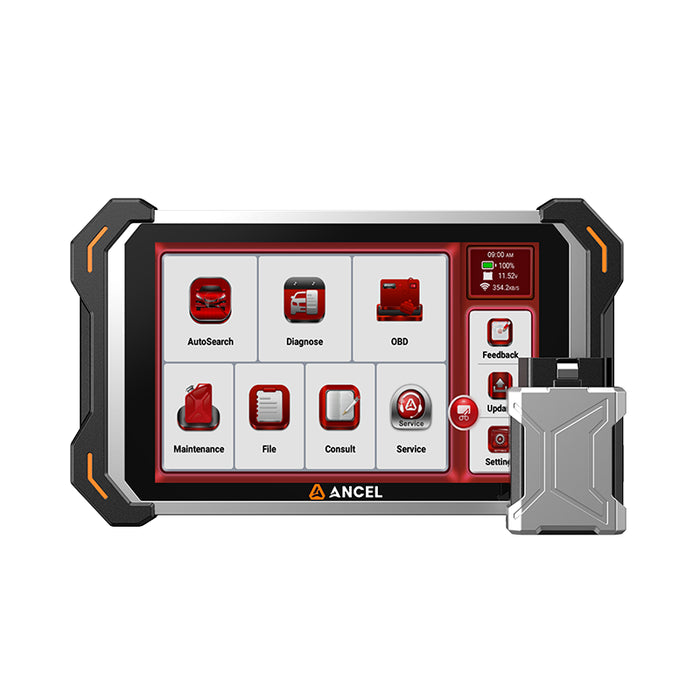
|
|---|---|---|---|
| Reads & clears P2279 DTC | ✅ Yes | ✅ Yes | ✅ Yes |
| Live Data (MAF / MAP / Fuel Trims) | ❌ No | ✅ Yes | ✅ Yes (Graphing) |
| Helps detect unmetered air | ⚠️ Limited | ✅ Good | ✅ Excellent |
| All-system scan capability | ❌ Engine only | ✅ Yes | ✅ Yes |
| Advanced / intelligent diagnostics | ❌ No | ⚠️ Basic | ✅ Yes |
| Best use case | Quick code check | DIY intake leak diagnosis | Turbo / recurring P2279 issues |
| Vehicle compatibility | OBD-II / EOBD | Broad brand coverage | OBD-II / EOBD + enhanced support |
| Price tier | 💲59.99 | 💲423.99 | 💲499.99 |
How to Fix a P2279 Code(DIY & Professional Solutions)
| Specific Repair Solution | Difficulty Level |
Key Operation Points | Cost Range |
|---|---|---|---|
|
DIY Basic Fix Tighten Loose Hoses/Clamps |
★☆☆☆☆ | Inspect intake/vacuum lines & airbox connections; snug clamps with a screwdriver (avoid over-tightening to prevent cracking) | $0–$20 |
|
DIY Intermediate Fix Replace Aging Small Parts |
★★☆☆☆ | Replace cracked vacuum lines, hardened intake boots, worn throttle body gaskets with OEM/OE-grade parts | $10–$50 |
|
DIY Intermediate Fix Clean MAF/MAP Sensors & Throttle Body |
★★☆☆☆ | ①MAF: Clean with specialized cleaner (do not touch sensor element) ②Throttle body: Clean valve/housing to eliminate carbon buildup gaps |
$0–$30 (cleaner only) |
|
Professional Fix Turbo/Supercharger Seal Replacement |
★★★★☆ | Repair boost-only leaks; install seals/gaskets with specialized tools | $300–$800 (parts + labor) |
|
Professional Fix Intake Manifold Replacement |
★★★★☆ | Replace cracked manifold (rare); full component swap + seal restoration | $500–$1,200 (parts + labor) |
|
Expert Professional Fix ECU Reprogramming |
★★★★★ | Calibrate ECU air-fuel ratio after intake part replacement; requires brand-specific diagnostic tools | $150–$300 |
|
Advanced Professional Fix PCV System Overhaul |
★★★☆☆ | Replace faulty PCV diaphragm (VW/Audi) / CCV valve (Mercedes); fix pressure-dependent leaks | $200–$500 (parts + labor) |
- The DIY total budget is controlled within $0 - $50, and this is the priority troubleshooting solution for P2279;
- Professional repairs include component replacement + labor charges. For high-end turbocharged models, due to the requirements of components / craftsmanship, the cost is much higher than that of ordinary fuel-powered models.
How Much Does It Cost to Fix a P2279 Code?
(DIY & Professional Solutions)
| Repair Type | DIY Cost (USD) | Professional Cost (Parts + Labor) (USD) |
|---|---|---|
| Tighten clamps/clean sensors | $0–$20 | $100–$200 (if done by a shop) |
| Replace vacuum lines/gaskets | $10–$50 | $200–$400 |
| Turbo/supercharger seal replacement | $150–$300 (parts only) | $300–$800 |
| Intake manifold replacement | $200–$500 (parts only) | $500–$1,200 |
| ECU reprogramming | N/A | $150–$300 |
How to Prevent the P2279 Code from Recurring
- Inspect intake components every 20,000 miles
- Use OEM/OE-grade parts
- Clean MAF/MAP sensors annually
- Maintain the PCV system
- Avoid extreme driving with aging parts
- Address other codes promptly( Fix P0171/P0174 -lean mixture codes immediately—they often precede P2279)
FAQs
Is P2279 the same as a vacuum leak?
No, but P2279 is a specific type of vacuum leak.
P2279: The P2279 trouble code indicates an unmetered air leak in the intake system (downstream of the MAF sensor).
- Consequence: Unmeasured air bypasses the Mass Air Flow (MAF) sensor, disrupting the engine’s air-fuel ratio.
- Common leak points: Intake manifold gaskets, PCV hoses, brake booster vacuum line connections, throttle body seals, and cracked intake pipes.
Vacuum Leak: A vacuum leak is a broad term for any abnormal air leak in the engine’s vacuum system.
- Most intake system vacuum leaks will trigger P2279 (or lean mixture codes P0171/P0174).
- Some vacuum leaks do not trigger P2279, such as:Minor leaks in the A/C control valve vacuum line, Leaks in the vacuum reservoir tank, Slight internal leakage in the brake booster.
Summary
- P2279 is a code for intake system-specific unmetered air leaks, and it is a common type of vacuum leak.
- A "vacuum leak" has a much wider scope, including leaks in other systems that do not affect the air-fuel ratio.
Can a bad PCV valve cause P2279?
Will P2279 cause a failed emissions test?
What’s the difference between P2279 and P0171?
What causes intake air system leak?
- Common causes include cracked intake hoses, loose clamps, faulty PCV valves/hoses, worn intake manifold gaskets, and broken brake booster hoses.
- Brand-specific triggers: Audi/VW (PCV diaphragm failure), Honda (intake boot aging), Mercedes (intake resonator leaks).
I just replaced the MAP sensor—why is P2279 still present?
- (1) The new sensor is low-quality and provides inaccurate data;
- (2) The original leak (e.g., intake pressure sensor failure, valve cover gasket leak) wasn’t addressed.
Will a broken air cleaner case clip cause P2279?
Recommend reading
BMW Fault Codes: Common Problems and Fixes
OBD-II P2002 Code: Causes, Symptoms, and How to Fix It
ANCEL DS300 Bidirectional OBD2 Scanner Review


