 Skip to content


In today’s vehicles, the onboard diagnostic system plays a crucial role in keeping things running smoothly.
One of its key functions is generating Diagnostic Trouble Codes, or DTCs, which act as signals that something might be wrong with your car.
These codes are designed to help identify specific issues with critical systems, from the engine to the transmission, and everything in between.
What Does DTC Mean in a Car?
DTC stands for Diagnostic Trouble Code. In a car, a DTC is a code generated by the onboard diagnostic system when it detects a problem in one of the vehicle’s monitored systems.
In simple terms, when you see a DTC on a car scanner, it means:
the vehicle has detected a condition that is outside its normal operating range.
DTCs do not always mean a part is broken, but they indicate where further inspection or diagnosis is needed.
How DTC Works
The process behind DTCs is quite straightforward. Modern vehicles are equipped with a network of sensors that monitor the performance of various systems, such as the engine, fuel system, exhaust system, and more.
When one of these sensors detects an abnormal condition—such as a misfire in the engine or a problem with the exhaust system—it sends a signal to the car’s onboard computer. The OBD system then generates a unique DTC that corresponds to the specific issue, storing the code in the vehicle's memory.
These codes can be retrieved by using an OBD reader, providing a clear starting point for diagnosing the problem. Essentially, the OBD system acts as an early warning system, alerting you to potential issues before they escalate.
Related Reading: Engine Code: A Quick Guide
Common DTC Codes and What They Mean
DTCs follow a standardized format, making it easier to understand the type of problem your car might be facing. The code consists of a letter followed by four digits, such as P0301 or C1234.
-
P stands for Powertrain (engine and transmission).
-
B indicates Body (e.g., airbags or seatbelt systems).
-
C refers to Chassis (suspension or braking systems).
-
U means Network (communication between various systems).
For example, a common powertrain-related code is P0301, which indicates a misfire in cylinder 1 of the engine. Another typical code, P0420, signals that the catalytic converter is underperforming. While these are just a few examples, there are thousands of possible DTCs, each tied to a specific malfunction.
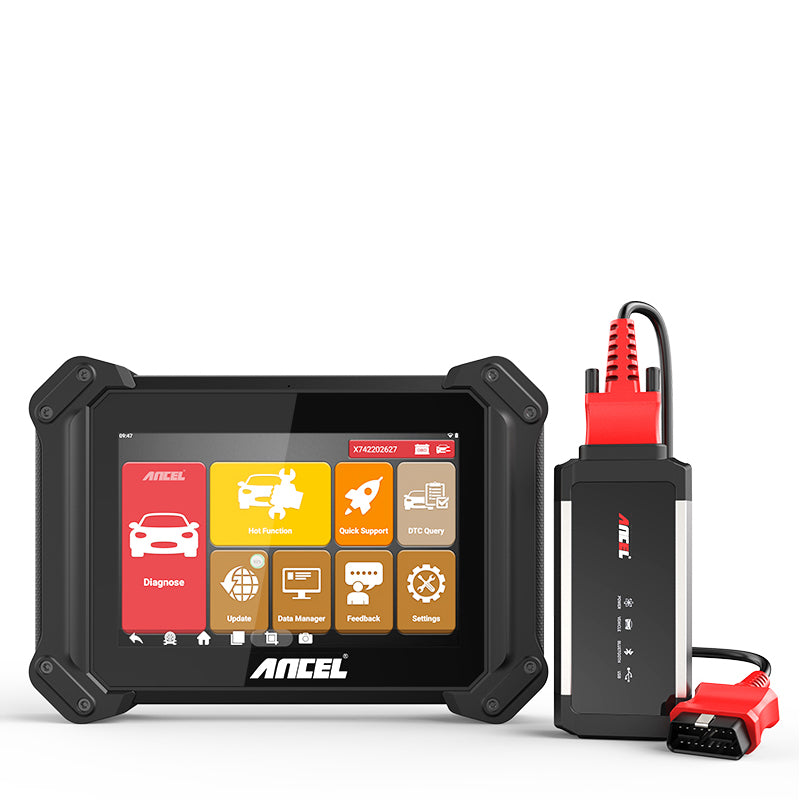
$439.99
DTCs in Specific Cars (BMW / PD Series)
BMW and PD series employ proprietary trouble code logic, exhibiting significant differences from generic OBD-II codes in variable valve timing, variable valve lift, fuel injection, and transmission systems.
Characteristics of BMW Fault Codes
- Includes manufacturer-specific subcodes with stricter monitoring thresholds
- Common in Valvetronic, VANOS, and electronic throttle systems for N20, N55, B48, and B58 engines
- Most codes require a bi-directional diagnostic tool for clearing
- Low voltage or poor ground connections may trigger intermittent fault codes
- Examples: P0011 (VANOS), P0597 (Thermostat), P1602 (Battery Voltage), PD Series Transmission Codes
Characteristics of PD Series Fault Codes
- Stored in dedicated control modules covering transmission, clutch, torque management, and CAN communication
- May not illuminate the malfunction indicator lamp but can cause limp mode, harsh shifting, or power limitation
- Repairs require access to the PD control module; standard OBD readers are insufficient
Why DTC Important
These codes serve as an early alert system, notifying you about potential issues before they turn into costly repairs. Rather than waiting for a check engine light to come on or experiencing a breakdown, you can use a simple OBD scanner to monitor your car’s health regularly. By catching problems early, you’re not only extending the life of your vehicle but also avoiding the stress and expense of major repairs that could have been prevented.
How to Read and Interpret DTCs
The first step is to obtain car diagnostic tool or a code reader, both of which are widely available online or at automotive stores.
To use the scanner, locate the OBD-II port under the dashboard near the driver’s seat. It’s usually near the steering column, just below the dashboard. Once plugged in, turn the ignition key to the "on" position (without starting the engine), and the scanner will begin communicating with your vehicle's onboard computer system.
The scanner will pull up a list of any stored trouble codes, which will appear on the display screen. Each code will usually consist of a letter and four digits. The first letter (P, B, C, or U) indicates the system affected—Powertrain (P), Body (B), Chassis (C), or Network (U).
Once you have the DTC, you’ll often see a brief description of the issue. However, the code alone may not provide enough detail to make a full diagnosis. While a scanner can tell you there’s a misfire, it won’t necessarily tell you whether it's a faulty spark plug, fuel injector, or another underlying issue causing the problem. This is where interpreting the code correctly comes into play.
What Does DTC Mean on a Car Scanner?
When a car scanner displays a DTC, it means the vehicle’s onboard computer has stored a fault related to a specific system or sensor.
The scanner does not diagnose the exact failed part. Instead, it points you to:
- - The affected system
- - The type of abnormal condition detected
This is why the same DTC can sometimes have multiple possible causes.
What Does 0 DTC Mean on a Code Reader?
If your scanner shows 0 DTC, it means there are currently no stored diagnostic trouble codes in the vehicle’s system.
This usually indicates:
- - No active faults are detected
- - The vehicle is operating within normal parameters
However, 0 DTC does not always guarantee that every system is perfect. Some issues may be intermittent or not severe enough to trigger a code.
DTC Severity Meaning (1 vs 2 vs 3)
What Does DTC Severity 2 of 3 Mean?
When reading diagnostic results from a car scanner, you may see a message like “DTC Severity: 2 of 3.”
This severity rating is designed to help drivers quickly understand how urgent a fault is, not just what system is affected.
In most diagnostic systems, severity levels are ranked from 1 to 3:
- Severity 1 – Low priority, often informational or monitoring-related
- Severity 2 – Medium priority, repair recommended soon
- Severity 3 – High priority, repair immediately
A Severity 2 of 3 fault means the issue is not an emergency, but it should not be ignored, as it may worsen over time or affect drivability under certain conditions.
Is DTC Severity 2 Serious?
Severity 2 faults fall into a “conditional risk” category.
They usually indicate:
- Reduced efficiency or performance
- Emissions-related problems
- Sensor or system behavior outside optimal range
While a Severity 2 DTC won’t typically cause immediate breakdown, it signals that the vehicle is no longer operating as intended. Left unaddressed, it may eventually trigger drivability issues or escalate to a higher-severity fault.
In other words:
Severity 2 is safe enough to keep driving short-term—but unsafe to ignore long-term.
Should You Repair a Severity 2 DTC Immediately?
The answer depends on symptoms, not just the code.
Repair Immediately If You Notice Drivability Issues
You should address a Severity 2 DTC right away if you experience:
- Rough idle or hesitation
- Loss of power
- Poor fuel economy
- Strong exhaust odor
- Warning messages alongside the code
Some codes, such as P0420, are commonly labeled as Severity 2 because they affect emissions efficiency but may not immediately impact engine operation.
When It’s Usually Safe to Keep Driving (Short-Term)
It’s often safe to continue driving temporarily if:
- There are no noticeable symptoms
- The vehicle runs normally
- The code does not immediately return after clearing
However, this should be viewed as a temporary allowance, not a permanent solution. Monitoring the fault and planning a repair is still recommended.
DTC Severity Levels Explained (1 vs 2 vs 3)
| Severity Level | Meaning | Recommended Action |
|---|---|---|
| Severity 1 | Low | Monitor condition |
| Severity 2 | Medium | Repair soon / monitor symptoms |
| Severity 3 | High | Repair immediately |
This severity system helps drivers prioritize repairs without unnecessary panic while still preventing long-term damage.
Conclusion
DTCs are an invaluable tool for maintaining your car and catching potential issues early. By understanding how these diagnostic codes work, you can be proactive about your vehicle’s health and avoid costly repairs down the line.
FAQs
How can I get my car’s DTCs?
To retrieve DTCs, you’ll need an OBD-II scanner or code reader. Simply plug the scanner into your car's OBD-II port, which is usually located under the dashboard near the driver’s seat. Once connected, the scanner will pull up any stored codes from your car's onboard computer.
Can a DTC be caused by a simple issue, like bad gas?
Yes, certain DTCs can be triggered by simple issues, such as poor-quality fuel or even a loose gas cap. However, it's important to confirm the cause by reading the code and diagnosing the vehicle properly. A simple issue might be an easy fix, while others could point to more complex problems.
Can I reset a DTC myself?
Yes, you can reset most DTCs using an OBD-II scanner, which typically has a function to clear codes once repairs have been made. However, it’s important to address the underlying issue before clearing the code. Resetting the code without fixing the problem will not solve the issue and could cause the code to reappear.
Why does my scanner say “DTC definition not found”?
This message usually means the scanner does not have the definition for that specific code in its database. It does not mean the code is invalid or that the vehicle has no problem.
Updating the scanner software or checking the code in an online database can often resolve this issue.
How to Fix a DTC Error Code
Fixing a DTC depends on the specific code and its underlying cause. Once you retrieve the code using an OBD-II scanner:
- Interpret the code – Identify the system or sensor affected.
- Inspect the components – Check for loose connections, damaged sensors, or other visible issues.
- Perform repairs – Replace faulty parts, tighten connections, or address system-specific problems.
- Clear the code – Use the scanner to reset the DTC after repairs.
Always consult your vehicle’s service manual or a professional mechanic if you’re unsure about a specific code or repair procedure.
What Happens When You Clear a DTC?
Clearing a DTC resets the code in your car’s computer, turning off any related warning lights. However:
- The underlying issue is not fixed; the code may reappear if the problem persists.
- Some systems may require a drive cycle to recheck conditions before the code is truly gone.
- Clearing codes too frequently without repair can make it harder to track intermittent issues.
Will a DTC Always Trigger the Check Engine Light?
Not necessarily. Some DTCs are “pending” or “informational” and will not immediately trigger the check engine light (CEL).
- Severity 1 or low-priority DTCs may only be stored in the computer for monitoring purposes.
- Higher severity DTCs typically trigger the CEL to alert the driver of urgent problems.
This is why it’s important to scan your vehicle regularly, even if no warning lights are on.
Recomended reading
Camshaft Position Sensor 101: How to Fix P0340 Code, VDC On, SES On, and SLIP On
What Does Ford Code P0193 Mean?
Easily Fix Car Code P1174 on Chevy (Recommended Professional Tools)
Fast and Quick Ways to Fix P0466 on Chevy Silverado
7 Effective Ways to Quickly Fix Vehicle Code P0174
How to Fix Code P0010 on a Chevy Malibu
What Causes Code P0068: MAP/MAF Throttle Position Errors
How to Fix the P0304 Code Cylinder 4 Misfire


