


The shift solenoid is a crucial component in your vehicle's transmission system, responsible for controlling the flow of transmission fluid to ensure smooth gear shifts. In this article, we'll explore how to detect a faulty shift solenoid and identify the common symptoms of a bad shift solenoid, helping you address potential issues before they escalate.
What Does the Shift Solenoid Do
The shift solenoid is an essential component of your vehicle's transmission system.
Typically located on or inside the transmission valve body (a critical control unit that regulates hydraulic fluid flow), most vehicles have multiple shift solenoids—each responsible for controlling the flow of transmission fluid within the transmission, which is necessary for the smooth operation of the transmission's gears.

This image shows the wiring harness connector on the transmission valve body — this is the shift solenoid’s electrical interface. | source: ANCEL
The shift solenoid is activated by the vehicle's engine control unit (ECU) based on input from various sensors, and it determines when and how the transmission shifts gears.
When the shift solenoid receives a signal from the ECU, it opens or closes to allow transmission fluid to flow into the appropriate channel.
This fluid pressure is what causes the transmission to engage or disengage gears, allowing for smooth and efficient shifting.
If the shift solenoid fails, it can cause a variety of transmission issues, as detailed in the symptoms below.
Unlike a shift solenoid, which actively controls fluid flow, a transmission sensor only monitors operating conditions and sends data to the ECU. Confusing the two can lead to incorrect diagnosis and unnecessary repairs.
Related Reading: What’s the Difference Between Bad Torque Converter and Bad Transmission?
Your Ultimate Solution for Shift Solenoid Diagnostics
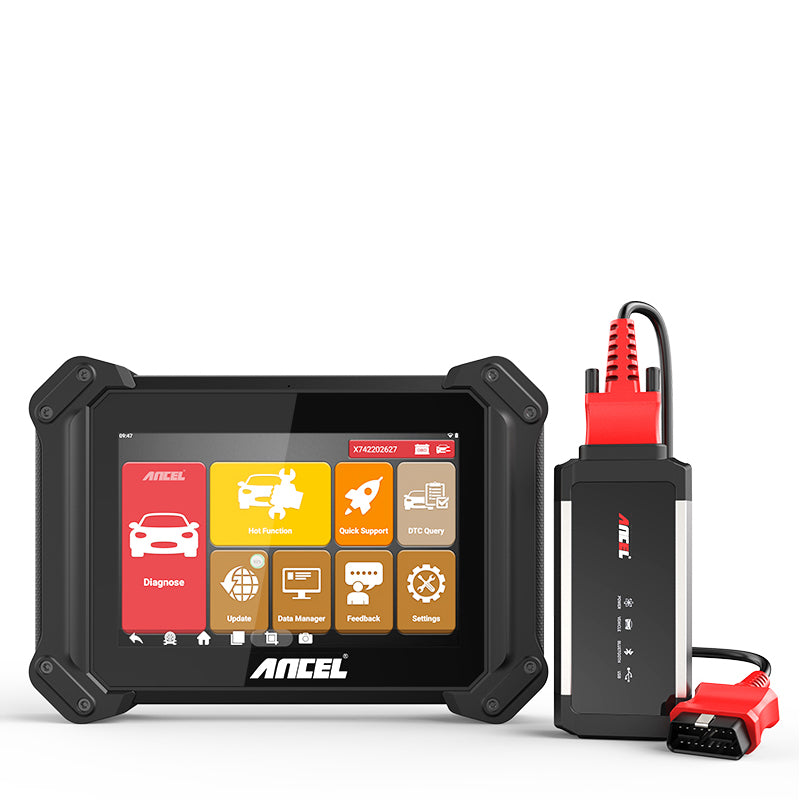
To accurately diagnose a faulty transmission solenoid, we recommend using the ANCEL V6 Pro 7 Warning Signs of a Failing Shift Solenoid.
This advanced diagnostic tool is capable of reading and clearing trouble codes related to the transmission solenoid, as well as providing live data on the transmission's performance.
By using the ANCEL V6 Pro, you can pinpoint the exact cause of the issue and determine whether the solenoid is at fault.
When diagnosing a shift solenoid issue, the ANCEL V6 Pro scanner will typically retrieve specific Diagnostic Trouble Codes (DTCs) that indicate problems with the solenoid. Common codes include:
- P0750: Shift Solenoid 'A' Malfunction
- P0753: Shift Solenoid 'A' Electrical
- P0755: Shift Solenoid 'B' Malfunction
- P0758: Shift Solenoid 'B' Electrical
- P0760: Shift Solenoid 'C' Malfunction
- P0763: Shift Solenoid 'C' Electrical
- P0765: Shift Solenoid 'D' Malfunction
- P0768: Shift Solenoid 'D' Electrical
These codes help identify which specific solenoid is malfunctioning, whether it's due to an electrical fault, a fluid pressure issue, or a mechanical failure within the solenoid itself.
The ANCEL V6 Pro also offers comprehensive diagnostic capabilities beyond just the transmission, allowing you to check other vital systems in your vehicle.
This makes it an invaluable tool for maintaining your vehicle's health and preventing future issues.
ANCEL V6 Pro provides the precision and reliability needed to keep your vehicle running smoothly.
$439.99
How to Diagnose a Bad Shift Solenoid (Step-by-Step)
Diagnosing a bad shift solenoid requires verifying symptoms + codes + data + physical checks—not just relying on poor shifting. Below is a concise, actionable step-by-step process to confirm if the shift solenoid is the root cause.
Step 1: Check Warning Lights & Transmission Trouble Codes
- A failing shift solenoid typically triggers the Check Engine Light (CEL).
- Use an OBD2 scanner to retrieve codes in the range P0750–P0768 (solenoid-specific: electrical faults, circuit failures, or performance issues).
- Key Note: These codes directly point to solenoid-related malfunctions—skip this step at your peril.
Step 2: Analyze Live Transmission Data
- Use an advanced diagnostic tool to monitor real-time data:
- If the ECU sends a gear-change command but the transmission doesn’t respond, the solenoid is likely faulty.
Step 3: Run Bidirectional Active Tests (If Tool-Supported)
- With a bidirectional scanner, manually command individual shift solenoids to activate/deactivate.
- No response = strong indicator of electrical failure (e.g., wiring, connector issues) or mechanical solenoid stuck.
Step 4: Inspect Transmission Fluid (Critical Pre-Replacement Step)
- Check for:
- Fluid issues often mimic solenoid failure—fix fluid problems first before replacing components.
Step 5: Rule Out Mechanical Transmission Damage
- If solenoid passes electrical tests but codes/symptoms persist:
Real-World Insight: When It’s Not Actually a Shift Solenoid
In real-world repairs, shift solenoid failure is often assumed—but not always confirmed. Transmission specialists frequently report cases where solenoid-related symptoms are caused by deeper mechanical issues, such as torque converter failure or metal contamination inside the transmission.
In these situations, metal debris can circulate through the transmission fluid, clogging hydraulic passages and interfering with solenoid operation. The solenoid may trigger fault codes or appear unresponsive, even though it is not the root cause of the problem.
This is why a solenoid code alone does not guarantee a simple fix. If metal contamination is present, replacing a shift solenoid without addressing the underlying mechanical damage can lead to repeated failure and costly repairs. ( source: r/Cartalk)
Electrical vs Mechanical Shift Solenoid Failure
| Category | Electrical Shift Solenoid Failure | Mechanical Shift Solenoid Failure |
|---|---|---|
| Common Causes | - Damaged wiring
|
- Debris/sludge buildup
|
| Key Indicators | - Triggers fault codes (e.g., P0750–P0768)
|
- No specific fault codes (may mimic fluid issues)
|
| Resolution | Wiring repair/reconnection
|
Solenoid replacement
|
What Causes Transmission Shift Solenoid Failure?
Transmission shift solenoid issues are rarely isolated to the component itself. In practice, failures typically stem from three distinct areas: electrical faults, hydraulic contamination, and mechanical wear.
1. Electrical Circuit Malfunctions
- Electrical issues are often the most direct cause of solenoid-related codes.
- Common Culprits: Damaged wiring harnesses, corroded connectors, or poor grounding.
- Internal Resistance: An abnormal resistance reading within the solenoid coil can prevent it from responding to ECU signals.
- Diagnostics: Trouble codes like P0750–P0768 frequently indicate a circuit-level failure rather than a physical transmission breakdown.
2. Hydraulic Contamination (The Most Common Cause)
Contaminated fluid is the silent killer of shift solenoids, often leading to recurring failures if the system isn't flushed.
- Fluid Degradation: Old, burnt fluid loses its lubricating properties and forms sludge
- Debris Blockage: Metal shavings or friction material from worn clutches can clog the valve body's micro-passages.
- The Result: Even a functional solenoid will appear "stuck" or "unresponsive" if fluid flow is physically restricted.
3. Underlying Mechanical Issues
Sometimes the solenoid is the "messenger" rather than the root cause.
- Pressure Loss: Worn valve body channels or failing internal seals can cause hydraulic pressure drops.
- Component Failure: Torque converter issues or damaged internal clutches disrupt the hydraulic balance the solenoid relies on.
- The Trap: Replacing a solenoid without fixing these mechanical leaks will only result in a temporary fix and repeated codes.
Bad Transmission Solenoid Symptoms: 9 Common Signs
The transmission solenoid is a critical component in your vehicle's transmission system, responsible for regulating the flow of transmission fluid throughout the system. When it malfunctions, it can lead to a variety of issues that may affect the overall performance and longevity of your vehicle.
1. Delayed or Erratic Shifting
When the solenoid is not functioning correctly, it can cause a delay in the transmission's ability to shift gears, leading to a noticeable lag.
This issue may manifest as a hesitation when accelerating or a delay when the vehicle should downshift, making driving unpredictable and potentially dangerous.
Erratic shifting occurs when the transmission shifts gears unexpectedly or at inappropriate times.
This can be caused by the solenoid failing to regulate the transmission fluid pressure correctly, leading to abrupt or harsh shifts.
If you experience these symptoms, it is crucial to have your vehicle inspected as soon as possible, as continued driving can cause further damage to the transmission.
2. Transmission Stuck in One Gear
Another common symptom of a bad transmission solenoid is the transmission getting stuck in one gear.
This issue is often referred to as limp mode, where the transmission is forced into a single gear to prevent further damage.
Limp mode is a protective feature designed to allow you to drive your vehicle to a service center safely, but it also indicates that there is a severe issue with the transmission.
When the solenoid fails, it may not be able to shift the transmission out of the gear it is currently in, leaving the vehicle stuck.
This can be particularly problematic if the transmission is stuck in a low gear, as it will limit your ability to drive at higher speeds.
Being stuck in a higher gear will make it challenging to accelerate from a stop. Both situations compromise the drivability of your vehicle and should be addressed immediately.
3. Transmission Slipping
Transmission slipping is another symptom that can indicate a problem with the transmission solenoid.
Slipping occurs when the transmission fails to engage a gear properly, causing the engine to rev without the vehicle moving as it should.
This issue is often accompanied by a noticeable decrease in power and acceleration, making it difficult to drive the vehicle safely.
Slipping can be caused by a lack of transmission fluid pressure, which the solenoid is responsible for regulating.
If the solenoid is not functioning correctly, it may not be able to maintain the necessary pressure to keep the transmission engaged, leading to slippage.
Addressing this issue promptly is essential, as continued slipping can cause significant damage to the transmission's internal components, potentially leading to costly repairs or even complete transmission failure.
4. Check Engine Light
The Check Engine Light is a general warning that something is wrong with your vehicle, and it can also be triggered by a bad transmission solenoid.
Modern vehicles are equipped with sophisticated onboard diagnostics systems that monitor various components, including the transmission solenoid.
When the system detects an issue, it will trigger the Check Engine Light to alert you to the problem.
While the Check Engine Light can be triggered by a variety of issues, a faulty transmission solenoid is one of the potential culprits.
If your Check Engine Light comes on, it is essential to have your vehicle scanned for trouble codes.
These codes can help pinpoint the exact cause of the issue, whether it is the transmission solenoid or another component, allowing you to take appropriate action.
5. Transmission Overheating
Transmission overheating is a serious issue that can cause extensive damage to your vehicle's transmission system.
One of the signs of a bad transmission solenoid is overheating, which occurs when the solenoid fails to regulate the flow of transmission fluid properly.
Transmission fluid is responsible for cooling the transmission, and when it is not circulated correctly, the transmission can overheat.
Overheating can cause the transmission fluid to break down, leading to increased friction and wear on the transmission's internal components.
This can result in a loss of transmission performance, strange noises, and eventually, complete transmission failure if not addressed promptly.
Monitoring the temperature of your transmission and addressing overheating issues as soon as they arise is crucial to preventing severe damage.
6. Odd Noises
Another symptom of a failing transmission solenoid is odd noises coming from the transmission.
These noises can range from a high-pitched whine to a grinding or clunking sound, and they often indicate that there is an issue with the transmission fluid pressure.
When the solenoid is not functioning correctly, it can cause irregularities in the fluid pressure, leading to these unusual noises.
The noises may only be present during shifting or when the transmission is under load, such as during acceleration.
If you notice any unusual noises coming from your transmission, it is essential to have the vehicle inspected to determine the cause and prevent further damage. Ignoring these noises can lead to more severe issues down the line, including complete transmission failure.
7. Loss of Reverse Gear
A less common but still significant symptom of a bad transmission solenoid is the loss of reverse gear.
If the solenoid responsible for engaging the reverse gear fails, the transmission may be unable to shift into reverse, leaving you unable to back up your vehicle. This can be particularly inconvenient and may indicate a more severe issue with the transmission.
The loss of reverse gear can be caused by a malfunctioning solenoid that is not able to regulate the transmission fluid pressure needed to engage reverse.
If you experience this issue, it is crucial to have your transmission inspected and repaired as soon as possible to avoid further complications and ensure your vehicle remains functional and safe to drive.
8. Harsh engagement
In some cases, improper solenoid operation can also cause harsh gear engagement or noticeable driveline shock during shifts.
9. Reduced fuel efficiency
Over time, inefficient gear engagement may lead to reduced fuel efficiency, especially during city driving.
How much does it cost to replace a shift solenoid?
| Repair/Replacement Type | Cost Range (USD) | Key Details |
|---|---|---|
| Electrical Fault Repair | $150 – $400 | - Fixes wiring, connectors, or corrosion
|
| Solenoid Replacement (Single) | $200 – $600 | - Includes OEM/aftermarket solenoid ($50–$200) + labor ($150–$400)
|
| Solenoid Replacement (Multiple) | $400 – $1,200 | - For 2+ solenoids (common in complex transmissions)
|
| Valve Body Cleaning (Contamination Fix) | $300 – $800 | - Cleans debris/sludge from valve body
|
| Valve Body Replacement | $800 – $2,000 | - Needed if channels are worn/damaged (not just contaminated)
|
| Mechanical Root Cause Repair | $1,000 – $3,500+ | - Fixes torque converter/clutch/transmission internal damage
|
| Diagnostic Fee | $50 – $150 | - Covers OBD2 scanning + problem identification
|
Can You Drive With a Bad Shift Solenoid?
In some cases, a vehicle with a bad shift solenoid may still be drivable for a short period, but continuing to drive is not recommended.
If the transmission enters limp mode, the vehicle may be locked into a single gear to protect internal components. While this may allow you to drive to a repair facility, prolonged driving can increase heat, accelerate clutch wear, and cause valve body damage.
Mild symptoms such as occasional delayed shifting may seem manageable at first, but solenoid issues often worsen over time. Severe symptoms like transmission slipping, overheating, or loss of reverse gear indicate that driving the vehicle could lead to major transmission failure.
For safety and cost reasons, diagnosing and repairing a bad shift solenoid as early as possible is the best course of action.
Do Shift Solenoid Symptoms Vary by Vehicle or Transmission?
Yes. While the core symptoms of a failing shift solenoid are similar across vehicles, the exact behavior can vary depending on the transmission design and vehicle model.
| Vehicle / Transmission | Common Shift Solenoid Symptoms | Notes |
|---|---|---|
| 2000 Honda Accord | Harsh shifting, delayed engagement | Solenoid location varies by engine |
| 2013 Nissan Altima (CVT) | Stuck in one gear, overheating | CVT sensitive to pressure control |
| BMW Automatic Transmission | Erratic shifting, warning lights | Often linked to valve body issues |
| GM 4L60E Transmission | No 3–4 shift, slipping | Known 3–4 solenoid wear issue |
Because of these differences, always consult vehicle-specific diagnostic information when dealing with transmission solenoid problems.
Conclusion
From delayed shifting and transmission slipping to overheating and the loss of reverse gear, these symptoms can signal serious issues that require prompt attention.
Early detection and diagnosis with tools like the ANCEL V6 Pro car scanner can save you from costly repairs and extend the life of your transmission.
FAQs
How is a shift solenoid replaced?
Replacing a shift solenoid typically involves draining the transmission fluid, removing the transmission pan, and accessing the solenoid. It's a job best handled by a professional mechanic due to the complexity.
How often should I check or replace my shift solenoid?
There isn't a specific interval for replacing a shift solenoid, but it's good practice to have your transmission system checked regularly, especially if you notice any symptoms of a malfunctioning solenoid.
Can a shift solenoid issue cause transmission fluid leaks?
While a bad shift solenoid itself may not directly cause a leak, it can lead to transmission overheating or other issues that might contribute to fluid leaks.
Is a Shift Solenoid the Same as a Shift Sensor?
No, a shift solenoid and a shift sensor are not the same component. A shift solenoid is an actuator that controls the flow of transmission fluid to engage or disengage gears. A shift sensor, on the other hand, monitors gear position or shift timing and sends data to the ECU.
While both components affect shifting behavior, they serve different functions and fail in different ways. Misdiagnosing one for the other can lead to unnecessary repairs.
How to Prevent Transmission Solenoid Problems
Preventing shift solenoid issues boils down to 3 key actions: protecting electrical connections, keeping transmission fluid clean, and maintaining overall transmission health.
- 1. Protect Electrical Systems (Fight Electrical Faults)
✅ Inspect Wiring & Connectors Annually
✅ Avoid Electrical Stress
✅ Scan for Early Codes
-
2. Maintain Clean Hydraulic System (Stop Contamination)✅ Change Transmission Fluid on Schedule✅ Replace Fluid Filter During Service✅ Address Leaks Immediately
-
3. Preserve Transmission Mechanical Health (Prevent Secondary Failures)✅ Drive Gently to Reduce Wear✅ Fix Mechanical Issues Promptly✅ Inspect Valve Body During Major Service
How to Unstick a Shift Solenoid
If a shift solenoid is stuck, it can often be unblocked by cleaning the solenoid and its hydraulic passages. Steps include:
- 1) Drain the transmission fluid;
- 2) Remove the transmission pan and filter;
- 3) Inspect the solenoid for debris or sludge;
- 4) Clean the solenoid and valve body passages with a safe solvent;
- 5) Reinstall with new fluid. If the solenoid remains unresponsive, replacement is recommended.


2 thoughts on “9 Bad Shift Solenoid Symptoms: Causes, Diagnosis & Repair Guide”
David Marlon-Lambert
I have a 2002 ford f150 4×2 had the shifting solenoid A changed but still came back on first it was p1715 code then po750 code now came back on all the time
janny
We provide search engine optimization for businesses.
Our services include content writing, keywords, and building backlinks
If you have a marketing department or SEO agency, please forward this email: jannyjorry212@gmail.com to them Or Share your marketing department or SEO agency email id *We’re SEO experts with a capable team of experienced professionals ready to help businesses optimize their websites.
I provide new high-traffic sites for guest posting SEO optimization on your websites
I have some new websites for guest posting that can increase your website’s traffic.
if you are interested in paid blog posting services I am waiting for a positive reply