


Fuel injectors play a crucial role in ensuring your engine runs smoothly, delivering the right amount of fuel at the right time.
But what happens if you don’t code your injectors after replacing or servicing them?
In this guide, we’ll break down everything you need to know about injector coding, why it matters, and what could happen if you skip it.
Injector Coding
Injector coding is the process of programming your vehicle’s Engine Control Unit (ECU) to recognize specific fuel injectors.
Each injector is designed with unique characteristics, including flow rate and fuel delivery timing. These characteristics can vary slightly from one injector to another, even if they are the same make and model.
By coding the injectors, the ECU can adjust its fuel maps and ensure that each injector delivers the precise amount of fuel required for optimal engine performance.
The coding process usually involves entering specific injector data (often a serial number or calibration code) into the ECU using specialized diagnostic tools.
Related Reading: What is a Fuel Injector and How Does It Work?
The Risks of Not Coding Injectors
1. Poor Engine Performance
The ECU relies on the coding to optimize fuel delivery, and without this crucial step, the fuel injectors may not operate as intended.
-
Misfires: An uncoded injector might inject too much or too little fuel, resulting in incomplete combustion and misfires.
-
Engine Hesitation: Uncoded injectors may cause hesitation during acceleration, as the ECU struggles to adjust to the fuel delivery parameters.
-
Rough Idle: An imbalance in fuel distribution can lead to a rough idle, making your vehicle run less smoothly when stationary.
In extreme cases, if the fuel mixture becomes too rich or too lean, it could even damage the engine over time.
2. Increased Fuel Consumption
Fuel injectors are precisely engineered to deliver the correct amount of fuel based on the engine's needs.
When the injectors are not coded, the ECU cannot adjust its fuel maps to account for the new injectors' specifications.
-
Increased fuel consumption: The engine may end up using more fuel than necessary to maintain the desired power output, as the ECU cannot optimize the air fuel mixture.
-
Decreased fuel efficiency: This leads to reduced miles per gallon, forcing you to refuel more often and increasing your overall running costs.

$699.99
3. Check Engine Light and Diagnostic Trouble Codes
When you install new injectors without coding them, your vehicle's ECU may trigger a check engine light. The ECU detects discrepancies between the programmed injector specifications and the actual performance of the injectors. This discrepancy can result in diagnostic trouble codes being stored.
-
P0200 – Injector Circuit Malfunction
-
P0300 – Random/Multiple Cylinder Misfire
-
P0171 – System Too Lean (Bank 1)
These error codes can cause a series of problems, including difficulty passing emissions tests and potentially voiding your vehicle’s warranty.
4. Engine Damage
Injectors that are not coded correctly can contribute to long-term engine damage. If an injector is delivering too much fuel, the engine could experience fuel washing. This is where excess fuel washes away the oil from the cylinder walls, potentially leading to:
- Increased engine wear
- Damaged pistons or cylinder heads
- Decreased engine life expectancy
An injector delivering too little fuel can cause the engine to run too lean, leading to overheating and possibly causing the engine to seize. In both cases, the damage could be costly and irreversible, requiring expensive repairs or even a complete engine replacement.
5. Emissions Problems
Fuel injectors are designed to meet stringent emission standards. When you replace or install injectors without coding them, your vehicle may fail to meet these standards.
The ECU might struggle to maintain the correct air-fuel ratio, which could result in the emission system malfunctioning. This might trigger emission related trouble codes, causing your vehicle to fail an emissions inspection.
6. Imbalanced Fuel Distribution
Fuel injectors are part of a finely-tuned system that balances the fuel delivery across all cylinders. If the injectors are not coded, the ECU cannot properly adjust the fuel distribution, leading to imbalanced fuel delivery.
-
Power loss in certain cylinders: If one or more injectors are delivering too much fuel, certain cylinders might operate inefficiently, reducing overall engine power.
-
Uneven acceleration: You may experience jerky or uneven acceleration, especially under load, as the ECU struggles to maintain balance between the cylinders.
7. Difficult or Costly Troubleshooting
When injectors are not coded, it becomes difficult for a mechanic or technician to diagnose the exact issue.
The ECU may not provide accurate data about the injector’s performance, leading to unnecessary repairs and diagnostic procedures.
This can increase the cost of repairs, as you might need to replace additional components that are not actually causing the issue.
Injector Coding vs. Bad Injector Failure — Why Both Can Trigger Codes
Sometimes your check engine light comes on not because your injector is physically bad, but because it hasn’t been coded correctly after replacement. Both scenarios can trigger diagnostic trouble codes (DTCs), but the root cause and solution differ.
Do Bad Fuel Injectors Throw a Code?
Yes — a failing or damaged fuel injector will often trigger diagnostic trouble codes (DTCs). However, the code usually indicates a cylinder imbalance or circuit problem, not simply “bad injector”.
| Situation | Cause | Typical Codes | Fix |
|---|---|---|---|
| Injectors not coded | ECU calibration mismatch | Misfire / fuel trim codes | Perform injector coding |
| Injector physically faulty | Internal clog/leak/electrical fault | P0201–P0208, P030X | Replace injector |
Here are the most common codes linked to faulty injectors:
| Code | What It Means | Possible Cause |
|---|---|---|
| P0200 | Injector Circuit Malfunction | Wiring issue, open/short circuit, injector failure |
| P0201–P0208 | Injector Circuit Cylinder Specific | Individual injector electrical fault |
| P0300 | Random Misfire | Fuel delivery imbalance |
| P0301–P0308 | Cylinder-Specific Misfire | Injector clogging or failure |
| P0171 / P0174 | System Too Lean | Injector not delivering enough fuel |
| P0172 / P0175 | System Too Rich | Injector leaking or stuck open |
A code related to injectors does not always mean the injector itself is bad. It could also be:
- Wiring harness damage
- ECU driver issue
- Low fuel pressure
- Vacuum leak (lean codes)
Proper diagnosis requires checking live data, fuel trims, and injector balance tests.
Injector Coding Problems & Programming Errors
| Code / Term | Meaning |
|---|---|
| DF859 (Renault) | Programming cycle not completed |
| Zero Quantity Calibration | ECU injector balance reset procedure |
| Index 10 Injectors | BMW injector flow class update |
| Delphi Injector Coding | Injector trim class programming |
Do All Vehicles Require Injector Coding?
| Vehicle Type | Coding Required? | Notes |
|---|---|---|
| Common Rail Diesel | ✅ Almost always | Individual correction values needed |
| Direct Injection Gasoline (GDI) | ⚠️ Often | BMW, VW, Ford EcoBoost |
| Port Injection Gasoline | ❌ Usually no | Older systems use uniform injectors |
| Performance / Index-class injectors | ✅ | BMW Index 10, Delphi coded sets |
Injector Coding by Vehicle Brand (Overview)
| Brand | Coding Needed | Tool Commonly Used |
|---|---|---|
| Nissan (Navara) | Yes (diesel) | Consult / advanced OBD tool |
| Renault 1.5 dCi | Yes | Clip / coding tool |
| VW 1.6 TDI | Yes | VCDS |
| Volvo D5 | Yes | VIDA |
| Ford Diesel | Often | Forscan |
| BMW N54/N55 | Yes (Index matching) | INPA / Launch |
How to Code Injectors Correctly
The process of coding injectors typically involves using a diagnostic tool that connects to your vehicle’s OBD-II port.
-
Accessing the ECU through a diagnostic tool, such as a scan tool or car reader.
-
Entering the injector information: This could include the injector’s serial number, calibration code, or flow rate information.
-
Verifying the data: Ensure the injector data is correct, as entering the wrong information could lead to further issues.
-
Saving the new injector settings to the ECU and testing the system to ensure proper function.
Injector Coding Tool That Auto Mechanics Use
When injector coding is required, a basic OBD2 reader isn’t enough. The job involves ECU communication, injector calibration input, and adaptation reset, which means you need a diagnostic tool that supports ECU-level programming functions.
Professional technicians typically use tools like the ANCEL DS600 and DS600BT, because they can:
- Perform injector coding and ECU programming
- Clear protection modes after injector replacement
- Run adaptation and relearn procedures
- Access bi-directional control for system testing
This becomes critical in situations mentioned above — such as engine misfires after injector replacement, DF859 programming cycle errors, or when the vehicle won’t start due to uncoded injectors. A tool with these capabilities allows the ECU to properly recognize the injector calibration values and restore fuel balance.

ANCEL DS600
Professional diagnostic scanner supporting injector coding, ECU programming, and full system bi-directional control. Ideal for workshop-level repair and calibration work.
View DS600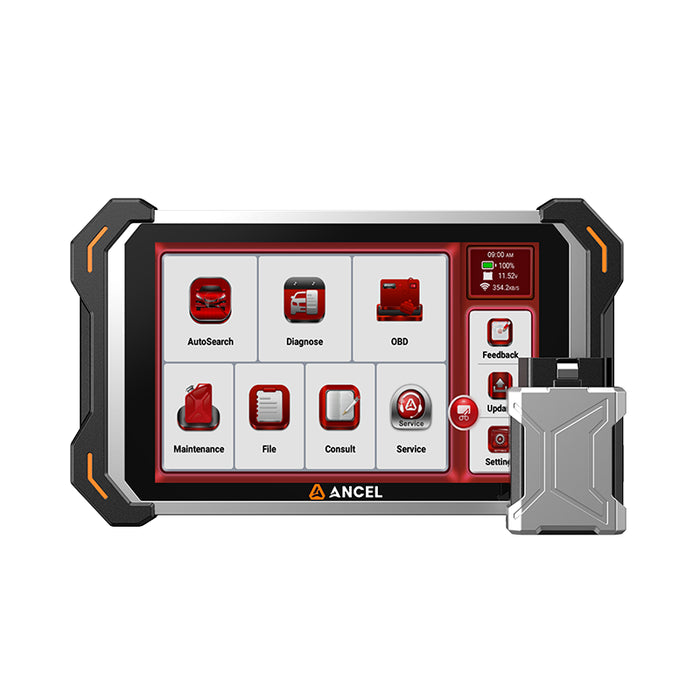
ANCEL DS600BT (Wireless)
Bluetooth version of the DS600 with the same injector coding and ECU programming capability, offering wireless mobility for flexible diagnostics in and around the vehicle.
View DS600BTRelated reading: ANCEL Wireless Full Diagnostic Scanner DS600 BT Review
Car Won’t Start After Injector Replacement?
| Possible Cause | Why It Happens | What To Do |
|---|---|---|
| Injectors not coded | ECU blocks proper fuel correction | Perform injector coding immediately |
| Air in fuel system (diesel) | Rail pressure cannot build | Prime fuel system / bleed air |
| Wrong injector index (BMW N54/N55 etc.) | Flow class mismatch | Verify Index number compatibility |
| ECU still in protection mode | Programming cycle not completed | Clear adaptation / run programming cycle |
| Rail pressure sensor not synced | ECU not recognizing injection event | Relearn fuel pressure system |
Conclusion
In modern vehicles, fuel injectors play a vital role in maintaining engine performance, fuel efficiency, and emissions compliance. Injector coding is an essential step after replacing or servicing injectors. Without it, you risk facing poor engine performance, increased fuel consumption, diagnostic issues, long-term engine damage, and failed emissions tests.
To avoid these consequences, always ensure that injectors are correctly coded to match your vehicle’s specifications.
FAQs
Will a bad fuel injector throw a code?
Yes. A malfunctioning injector usually triggers DTCs such as P0201–P0208 (cylinder-specific injector circuit faults) or P0301–P0308 (cylinder misfires). However, sometimes the code may point to wiring or ECU issues rather than the injector itself. Proper diagnosis with live data and fuel trims is recommended.
Can I drive my car without coding the injectors?
While your car might still run without coding the injectors, you’ll likely experience poor engine performance and higher fuel consumption. This could also lead to check engine lights and error codes, affecting your ability to pass emissions tests and maintain vehicle reliability.
How do I code injectors in my vehicle?
To code injectors, you’ll need a diagnostic tool connected to your vehicle’s OBD-II port. Through the tool, you’ll enter specific injector data (such as serial numbers or calibration codes) into the ECU. Consult your vehicle’s manual or a professional mechanic for the exact procedure, as it may vary by make and model.
Can skipping injector coding lead to engine damage?
Yes, if injectors are not coded, you may experience fuel imbalances that can cause engine misfires, lean or rich fuel mixtures, and overheating. Over time, this can lead to engine wear, damaged pistons, or cylinder head failure, potentially resulting in costly repairs.


1 thought on “What Happens If You Don’t Code Injectors? Risks, Programming Errors & How to Code Them”
Aletrice Thompkins
I have a 2016 C-300 Mercedes. I had a new engine put in after 11 months of driving it the engine seized up on me and they are saying the engine must have been defective! So I took it to Mercedes dealership and the only way to see why it seized up was to do a tear down of the engine! So they did the tear down and they stated that it wasn’t calibrated with the correct codes.at installation. My question is, is it possible to drive a car for 11 months without calibrating the injector or by putting the wrong codes in???