


What is an Oil Temperature Sensor?
Why is Monitoring Oil Temperature Critical for Engine Longevity?
Compared to coolant temperature, oil temperature more truly reflects the engine's workload and internal thermal state, making it crucial for extending engine life:
- Engine oil directly participates in lubrication and heat dissipation. It not only maintains the lubrication performance of engine components but also assists in cooling to prevent engine overheating;
- Oil temperature data influences the ECU's engine protection strategies, helping to timely adjust operating parameters and avoid risks;
- Relying solely on the coolant temperature gauge is insufficient. Under conditions such as high load or prolonged high-speed driving, the coolant temperature may be normal while the oil temperature is already too high—accurate monitoring by the sensor is essential;
- Precise temperature data also enables the ECU to optimize fuel efficiency and reduce harmful gas emissions.
How Does an Oil Temperature Sensor Work?
Most oil temperature sensors use a thermistor internally, typically of the NTC (Negative Temperature Coefficient) type. Their operating principle is based on the physical properties of semiconductor materials:
- Inverse relationship: As the oil temperature rises, the resistance of the thermistor decreases; as the oil temperature drops, the resistance increases.
- Signal conversion: The sensor itself does not directly generate temperature values. Instead, it changes the voltage signal output to the Engine Control Unit (ECU) through variations in resistance.
- Data mapping: After receiving the voltage signal, the ECU converts it into a specific temperature value (°C or °F) based on a pre-set "resistance-temperature mapping table" stored internally.
- Design advantages: This design features a simple structure and exceptional reliability. It responds quickly to temperature changes and can work stably for a long time in the harsh environment of the engine compartment, which involves high temperatures, high pressure, and chemical corrosion.
How Does an Oil Temperature Sensor Work?
Where is the Oil Temperature Sensor Located?

Example of a typical setup where the oil temperature sensor is integrated with the pressure sensor on the oil filter housing
Oil Temp Sensor vs. Coolant Temp Sensor Key Differences
| Comparison Dimension | Oil Temperature Sensor | Coolant Temperature Sensor |
|---|---|---|
| Monitoring Medium | Engine oil | Engine coolant |
| Main Function | Monitor the working status of the lubrication system and prevent lubrication failure | Monitor whether the cooling system dissipates heat normally |
| Direct Impact | Oil viscosity, lubricating film stability, internal wear | Fan control, mixture adjustment, engine overheat prevention |
| Temperature Change Characteristics | Fast temperature rise, very sensitive to load changes | Relatively gentle temperature rise, lagging change |
| Typical Installation Location | Oil pan, oil filter housing, main oil gallery | Water passage, thermostat housing, near the cylinder head |
| Effect on ECU | Affects protection strategy, power limitation, turbo protection in some models | Affects fuel injection quantity, ignition timing, cooling fan start and stop |
| High Temperature Risk | Oil film damage, bearing wear, turbo damage | Cooling failure, cylinder gasket burnout |
| Likelihood of Being Ignored | Easy to be ignored, many models do not have an independent oil temperature gauge | Most vehicles will display or indirectly prompt |
| Typical Misconception | Assuming the engine is in good condition if the water temperature is normal | Mistakenly believing that water temperature is equivalent to the actual working temperature of the engine |
Difference Between Oil and Transmission Fluid Sensors
- Engine Oil Temperature Sensor
This sensor focuses on high-temperature stability and proper sealing. For most car owners, it works like a health thermometer for the engine. If the sensor cannot provide stable readings under high temperatures, or if poor sealing causes oil leaks, the instrument readings and ECU decisions can become inaccurate. Overall, the engine oil temperature sensor plays an important role in engine longevity and overall reliability.
- Hydraulic Oil Temperature Sensor
This type of sensor is more commonly found in industrial equipment or special-purpose vehicles, and is less relevant to everyday passenger cars. From a vehicle owner’s perspective, its importance is not about daily driving comfort, but whether the system can operate reliably under high pressure and heavy loads. Hydraulic oil temperature sensors are critical for ensuring long-term stability in high-load systems.
- Transmission Fluid Temperature Sensor (Automatic Transmission)
When the fluid temperature becomes too high, drivers may notice that the vehicle is “reluctant to shift” or that power feels limited. In most cases, this does not mean the transmission is failing—it means the system is protecting itself. As a result, the transmission fluid temperature sensor directly influences driving comfort and shift performance.
Relevant: OBD2 Scanner: Troubleshooting Guide for Transmission Issues
Signs of a Failing Oil Temperature Sensor
Relevant: Decoding Your Car's Check Engine Light
Understanding the P0198 Diagnostic Code
P0198 is a common automotive diagnostic trouble code directly related to the engine oil temperature sensor, whose full name is "Engine Oil Temperature (EOT) Sensor Circuit High Input". P0198 will be triggered when the ECU detects an abnormally high voltage in the engine oil temperature sensor circuit.
Common Causes of a High Signal (P0198)
Since P0198 focuses on "high circuit voltage", its causes are usually related to excessive resistance or open circuit:
Inspection, Test, and Diagnosis
- Visual Inspection
Before using any diagnostic tools, a simple visual check can often reveal the problem quickly:
-
- Check whether the oil temperature sensor connector is loose, water-damaged, or shows visible corrosion
- Inspect the wiring harness for wear, aging, or signs of heat damage
- Look for any oil leakage around the base of the sensor
- Multimeter Testing
If everything looks normal on the outside, you can proceed with multimeter testing:
-
-
Measure the sensor’s resistance with the engine completely cold
-
As the engine warms up, the resistance should change smoothly
-
If the resistance stays constant, reads infinite, or is far outside the manufacturer’s specified range, the sensor is likely faulty.
- Scan Tool Diagnosis
Before removing any components, connect an OBD2 scan tool and enter Live Data mode.
-
-
Check whether the oil temperature reading is logically reasonable (for example, on a cold engine, oil temperature should be close to ambient temperature)
-
If the scan tool shows extreme values such as –40°C or 200°C, it usually indicates a serious circuit or sensor fault
-
Also check whether related fault codes, such as P0198, are stored in the system.
How ANCEL Scan Tools Help You Diagnose Oil Temperature Issues
As a world-leading automotive diagnostics expert, ANCEL plays a key role in oil temperature-related faults for DIY enthusiasts, car owners, and professional mechanics.
- Real-time Data Stream Visualization
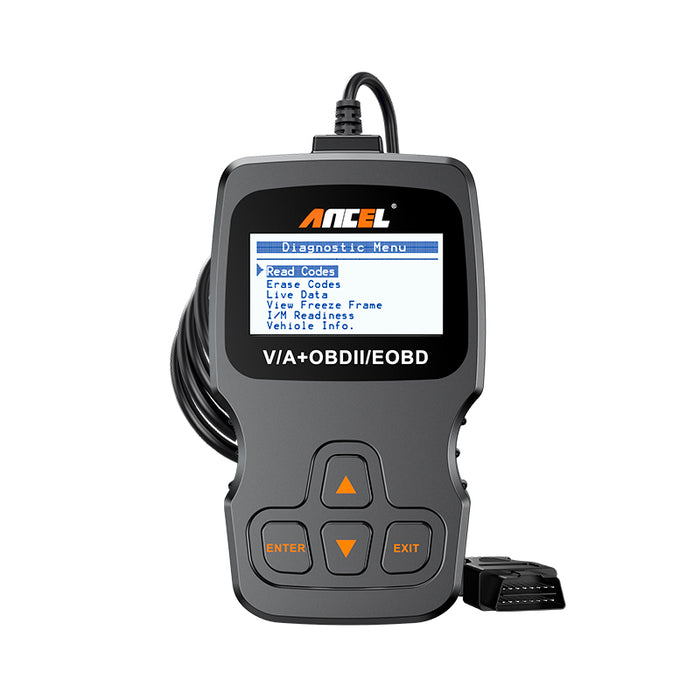
With ANCEL scanners (such as the classic AD310 or V6), you can directly view the real-time oil temperature data stream. By observing the trend of temperature changes with working conditions, you can often detect abnormal signals before the fault light turns on. In addition, you can perform multi-parameter comparison, comparing oil temperature, water temperature, and engine load on the screen at the same time. If the water temperature rises rapidly while the oil temperature shows no fluctuation, ANCEL will help you intuitively lock the fault range.
- P0198 Code Reading & Clearing
When fault codes such as P0198 appear, ANCEL devices can quickly read detailed code information, and clear the fault codes after maintenance to verify whether the problem is truly solved.
- Advanced Active Testing Function (Actuation Tests & Bi-directional)
For users of advanced models such as ANCEL V6 Plus, it can be used to verify whether the ECU correctly receives the sensor signal, helping to distinguish whether the problem is with the sensor or abnormal control logic.
- Wide Compatibility with Global Vehicle Models (Compatibility Check)
ANCEL scanners support a variety of mainstream vehicle models including Volvo, BMW, and Mercedes, and can automatically match the corresponding diagnostic protocols, making the diagnosis related to oil temperature more efficient and intuitive.


How to Replace an Oil Temperature Sensor
- Prepare Tools & Materials: Wrench, oil drain pan, ANCEL scanner; New sensor, thread sealant
- Locate & Remove: Find the sensor (oil filter housing/oil pan/main oil gallery), disconnect the wiring harness, unscrew the old sensor and catch residual oil
- Install: Apply thread sealant to the new sensor's thread, tighten it, reconnect the wiring harness
- Check: Reconnect the battery, start the engine to check for oil leakage, use an OBD2 scanner to clear fault codes and verify normal oil temperature data
Oil Temperature Sensor Replacement Cost
- Parts Cost: $20-$80 (varies by vehicle model and sensor type)
- Labor Cost: $50-$150 (repair shop)
Can I Bypass an Oil Temperature Sensor?
No. Bypassing a faulty oil temperature sensor will cause the ECU to lose the real oil temperature data. When the oil temperature is too high, the ECU cannot receive the abnormal signal and cannot trigger the corresponding protection strategy, which will lead to a sharp drop in oil viscosity, damage to the oil film, and intensified wear of internal engine parts.
Long-term bypassing will cause the ECU to operate in an abnormal logic for a long time, which may also cause damage to the ECU itself.
Some people do this usually to temporarily turn off the fault light or prevent the vehicle from entering the protection mode. The seemingly convenient "bypass solution" is essentially exchanging the engine's service life for short-term normal driving. In comparison, directly replacing an oil temperature sensor is low-cost, low-risk, and more in line with the safety and economy of long-term vehicle use.
Choosing the Best Oil Temp Sensor for Your Car
-
OEM (Original Equipment Manufacturer) Brands:
-
Bosch, Denso, and NGK/NTK: These brands are typically the initial suppliers for global mainstream automakers like Toyota, VW, and BMW. Choosing these brands means you are getting a product that meets the exact specifications of the original part.
-
-
Specialized Aftermarket Electrical Brands:
-
Delphi: With a deep background in sensor technology, Delphi products are highly reliable in terms of anti-interference capabilities and physical structural integrity.
-
Standard Motor Products (SMP): Provides stable and cost-effective alternatives for older models and a wide range of mainstream vehicles.
-
-
Heavy-Duty/Commercial Grade:
-
For heavy-duty engines like the Volvo D13, it is recommended to purchase Genuine Volvo or Mahle sensors to handle the extreme load and high operating hours of commercial vehicles.
-
Compatibility: How to Confirm the Sensor Fits Your Vehicle
-
Verify the OEM Part Number
-
Inspect the Connector Design:
-
Thread Specifications and Sealing
-
Resistance Logic Matching:
FAQs
How often should you replace an oil temperature sensor?
What is the ideal temperature range for engine oil?
For most modern passenger cars:
- Ideal Range: When driving normally, it is usually between 100°C and 110°C (212°F - 230°F). At this temperature, the engine oil can effectively burn off internal water vapor and fuel diluents, and maintain the optimal viscosity.
- - Warning Threshold: If the oil temperature continuously exceeds 120°C (250°F), the engine oil will accelerate degradation and lose its oil film protection ability.
Note: The oil temperature of diesel engines is usually slightly lower, about 90°C - 105°C.
Can I use any oil temp sensor in my vehicle?
Is a cooking oil temperature sensor different from a car sensor?
Does a faulty sensor always trigger a dashboard light?
It is recommended to use a scanner to view the Live Data, which helps detect such hidden faults.
Recommend Reading:
Jump Starter Compared: Super Starter vs Supercapacitor and Lithium Ion Jump Starters


